

Japandi Kitchen Designs for Malaysia: For Open-Plan and Wet/Dry Kitchen Setups
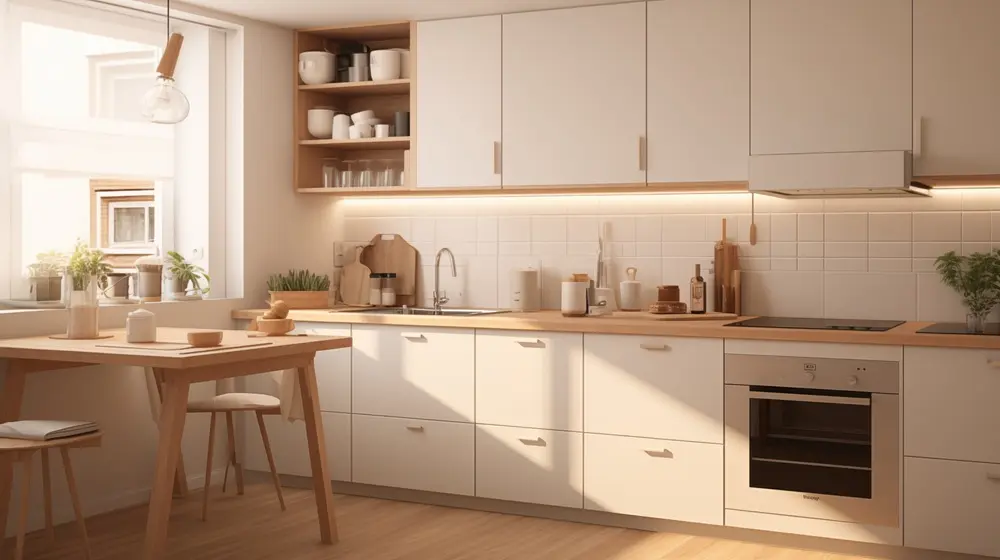
Japandi kitchen design has quickly gained popularity across Malaysia for its ability to blend Japanese calm with Scandinavian simplicity. This aesthetic creates kitchens that feel warm, functional, and balanced—perfect for Malaysia's modern homes, whether open-plan apartments or landed houses with distinct wet and dry kitchen areas. By combining natural materials, thoughtful lighting, and well-organized layouts, a Japandi kitchen provides both serenity and practicality in everyday life.
The Benefits of a Japandi Kitchen in Malaysia
A Japandi kitchen is more than a visual statement. It is a lifestyle choice that emphasizes mindfulness, natural textures, and efficient use of space—all highly relevant in Malaysia's tropical climate and compact urban homes.
One of the most appealing features of Japandi design is its reliance on natural materials such as wood, rattan, bamboo, and stone. These elements are not only aesthetically pleasing but also suitable for Malaysia's warm and humid conditions. Light-colored woods like oak or ash keep interiors bright and breathable, while matte finishes help reduce heat retention. The result is a kitchen that feels cool and comfortable, even during Malaysia's hottest months.
Another major benefit is adaptability. In many Malaysian homes, kitchens are divided into wet and dry zones. The wet kitchen is usually placed at the back of the house and used for heavier cooking that involves oil, smoke, or water. It requires durable, easy-to-clean materials that can withstand daily use. The dry kitchen, on the other hand, is often integrated into the dining or living space and is designed for light cooking, serving drinks, or entertaining guests. The Japandi aesthetic adapts seamlessly to both environments—offering calm, minimal beauty in the visible dry area and high functionality in the practical wet space.
Japandi design also strikes a balance between aesthetics and practicality. Every feature is intentional: from neatly aligned cabinets and efficient storage to ambient lighting that creates warmth without clutter. The philosophy reflects both Japanese mindfulness and Scandinavian efficiency, resulting in a space that encourages slower living and conscious cooking. Slim, multi-purpose furniture, modular cabinetry, and neutral tones further enhance the sense of openness, making it ideal for Malaysian homes of all sizes.
Japandi Kitchen Ideas for Wet and Dry Kitchens in Malaysia
Designing a Japandi kitchen in Malaysia means creating a space that supports daily cooking routines while maintaining a sense of calm. Whether you are renovating an older home or designing a new layout, the following ideas will inspire you in bringing the Japandi aesthetic into both your wet and dry kitchen zones.
Japandi Kitchen Ideas for the Wet Kitchen
In a Malaysian household, the wet kitchen is the heart of serious cooking—where stir-frying, boiling, and washing take place. A Japandi approach to this space prioritizes durability without sacrificing aesthetic appeal, ensuring that the kitchen remains functional for heavy cooking while retaining a sense of calm and order.
1. Closed Storage and Organization
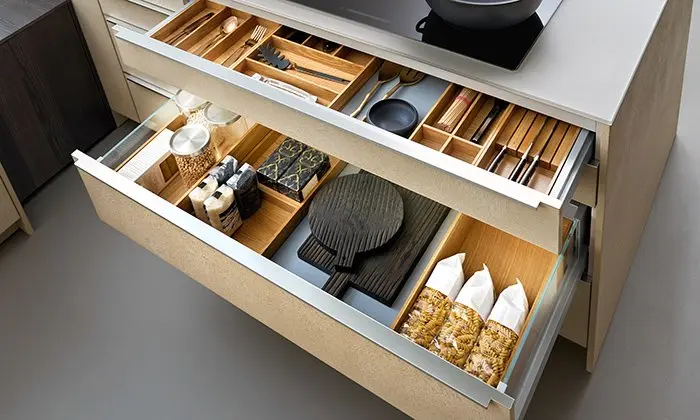
Closed cabinetry is essential for maintaining a clean, uncluttered appearance. Cabinets with smooth wooden textures, minimalist brass or black handles offer subtle visual accents without overwhelming the design. These cabinets offer ample storage for cookware, utensils, and ingredients, keeping them neatly organized and out of sight. Thoughtful organization not only maintains the kitchen's visual harmony but also enhances efficiency, allowing home cooks to focus on their tasks without distraction.
2. Kitchen Walls, Countertops and Functional Appliances
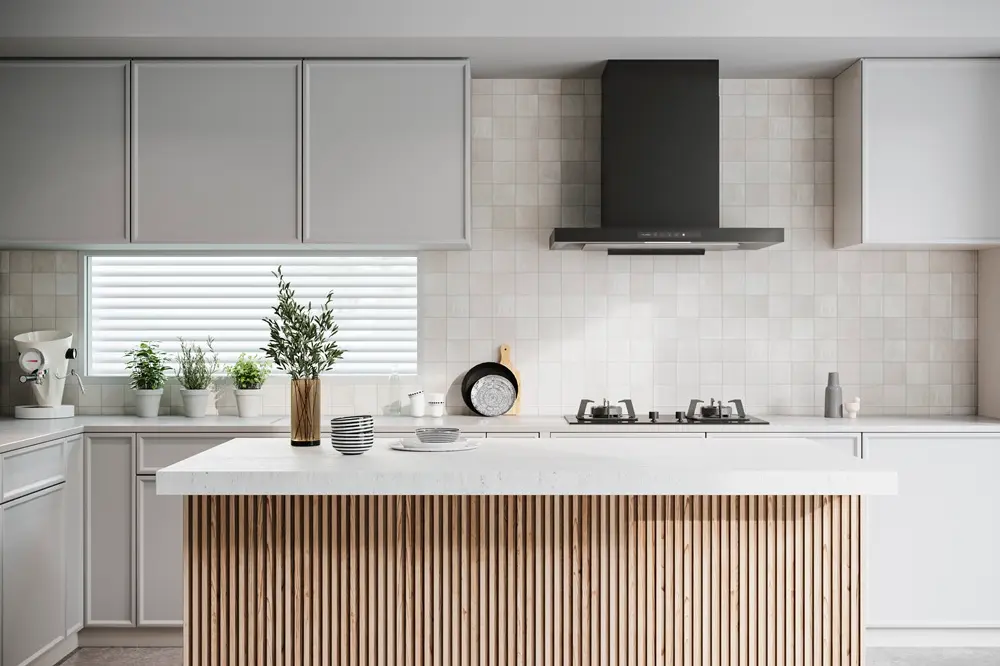
Surfaces in the wet kitchen should balance practicality with a serene, understated aesthetic. Durable finishes such as ceramic tiles, quartz, or microcement work well on walls and countertops, protecting against oil splashes and moisture. In a wet kitchen, appliances like the stove, oven, and range hood should combine professional-grade function with minimalist aesthetics. Choose finishes in matte black, stainless steel, or neutral tones to harmonize with the cabinetry. Installing a range hood that allows for efficient oil repair to prevent oil buildup in the room, and an easy-to-clean stove that reduces the hassle of daily maintenance, will help maintain a tidy and organized kitchen atmosphere. Together with other thoughtfully selected appliances, these details preserve the calm, uncluttered look that defines Japandi design.
3. Colors
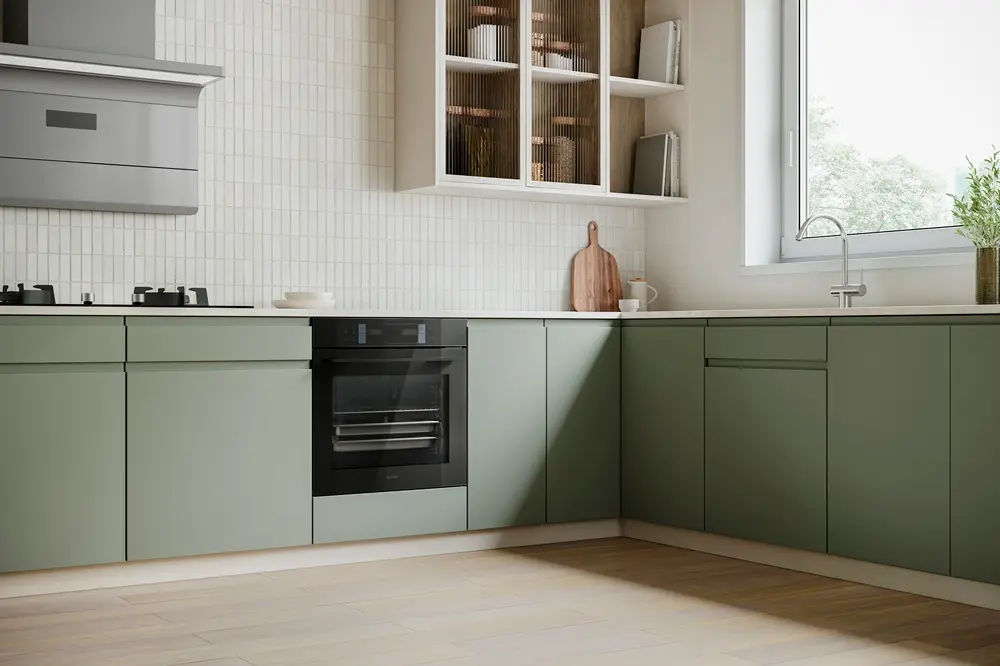
In a wet kitchen, the number of daily-use items naturally increases, making the space prone to looking cluttered. Applying clear color rules is an effective way to maintain visual calm. By grouping all visible elements, from cabinetry and walls to kitchen tools, storage containers, tableware, and even towels, into three colors or fewer, the kitchen will appear organized and cohesive, even when it is filled with essentials. For a warm and inviting atmosphere, consider a palette of beige, taupe, and light oak tones. Those who prefer a cleaner, more modern look can opt for white, grey, and matte black, while clay, sand, and muted green hues create a grounded, organic feel that complements Japandi's natural aesthetic.
4. Japandi Furniture & Decor
To complete the atmosphere, integrate simple, functional furniture such as low wooden stools that provide a resting spot between tasks. Wooden and bamboo blinds have the advantage of being easy to maintain in cooking areas, as they can be quickly wiped clean, while still allowing ventilation and natural light to enter, giving the space a brighter, more open feel. Incorporating humidity-tolerant and useful plants such as rosemary, Italian parsley, and snake plants not only brings greenery and vitality into the space but also provides fresh ingredients at arm's reach, reinforcing the connection between interior and nature that defines Japandi design.
Japandi Kitchen Ideas for the Dry Kitchen
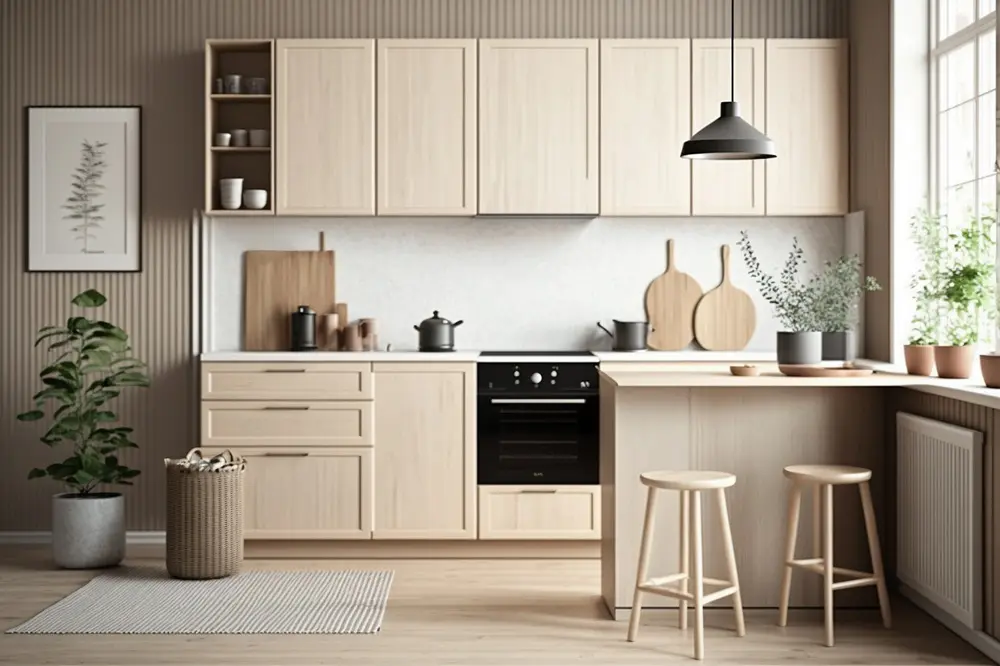
The dry kitchen often connects directly to the dining or living area, making it both a visual focal point and a social space. Here, the Japandi aesthetic shines through its use of open layouts, calming colors, and warm, inviting lighting.
1. Open Shelving and Display Storage
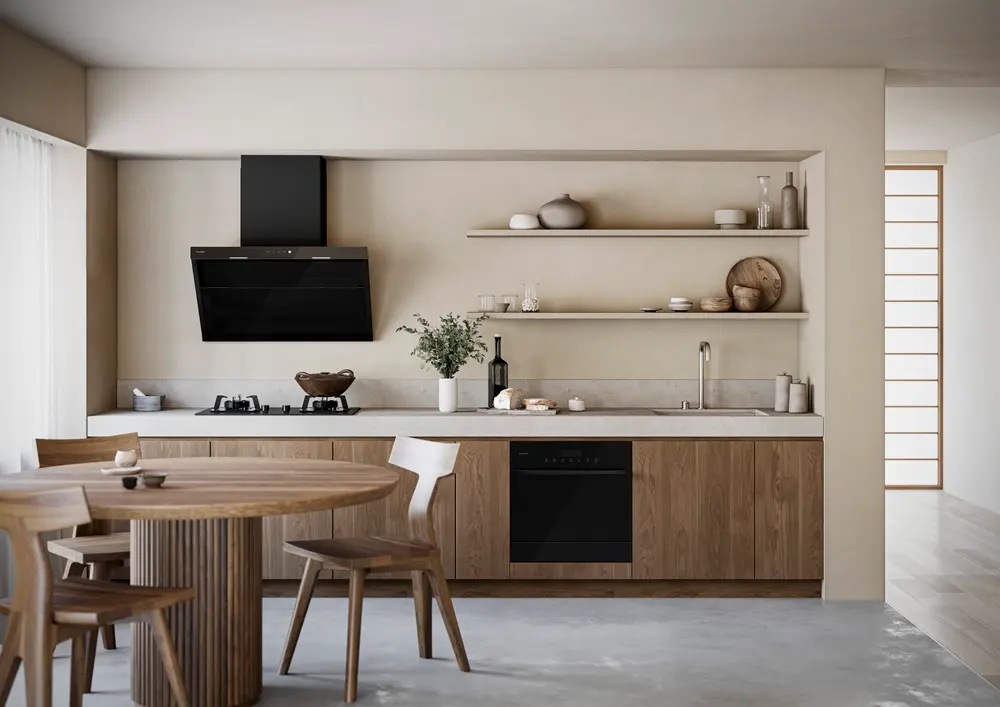
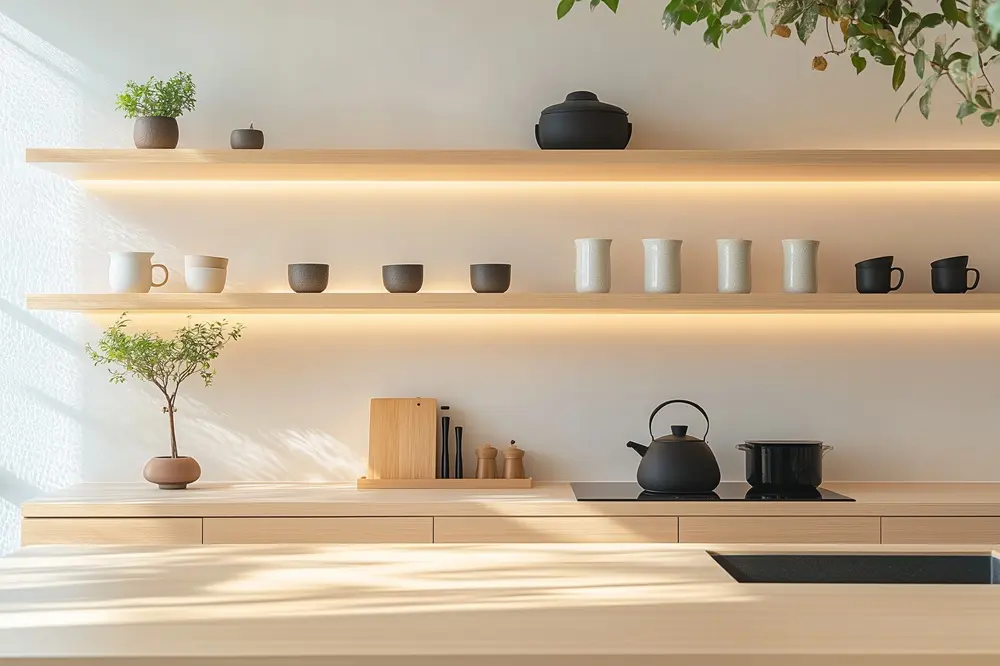
Unlike the wet kitchen, the dry kitchen embraces open shelving and display areas. This creates an airy, welcoming atmosphere while showcasing curated items such as handmade ceramics, cups, or glass jars. This approach encourages intentional organization, as only items that complement the Japandi aesthetic are displayed, maintaining a sense of calm and order. In addition to aesthetics, open shelving offers functional benefits: frequently used items are within easy reach, making meal preparation and entertaining more convenient.
2. Compact Appliances
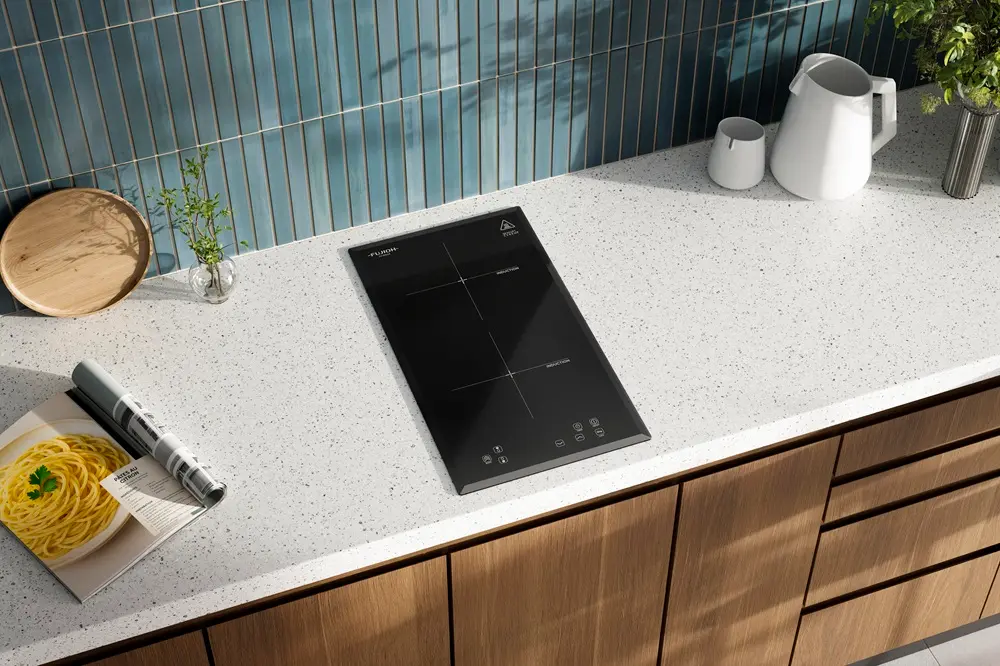
Compact built-in appliances like induction hobs or small ovens are ideal for the dry kitchen, where lighter cooking and meal preparation take place. Their sleek, minimalist and integrated design helps maintain a clean, uncluttered appearance, while maximizing counter space for social interaction or display. By combining functionality with minimal visual impact, built-in appliances allow the dry kitchen to remain both aesthetically pleasing and highly efficient, in line with the Japandi philosophy of simplicity and thoughtful design.
3. Colors
The color palette should continue the same soft neutral tones from the wet kitchen, establishing a seamless flow between the two areas. Matte cabinetry, light wood finishes, and natural stone countertops maintain texture and depth while keeping the space visually balanced. Accent colors, such as muted greens, dusty blues, or soft clay tones, can be introduced sparingly through furniture, backsplashes, or small decorative objects to add personality. To create a sense of unity with the adjoining dining and living spaces, consider echoing accent colors already present in those rooms, ensuring a cohesive and harmonious overall look.
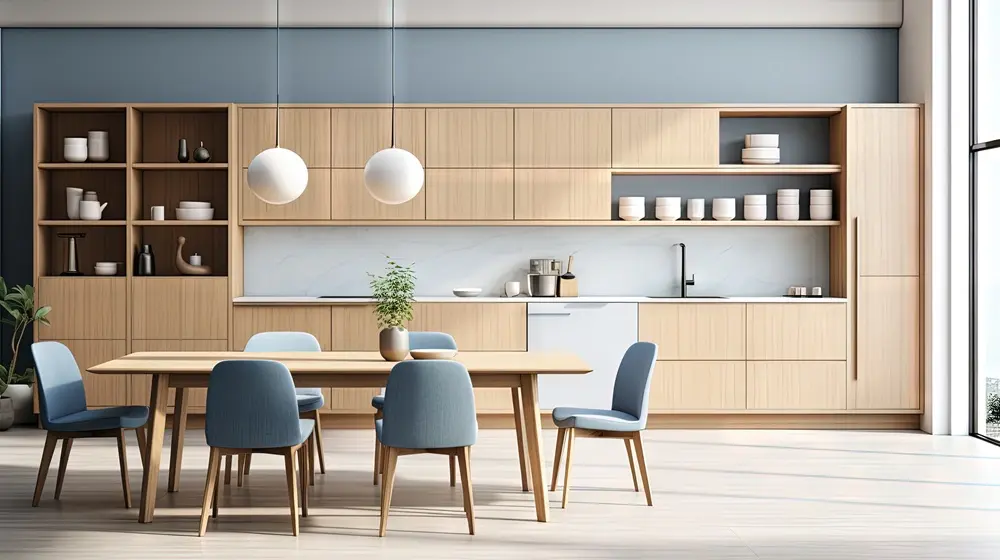
4. Japandi Furniture & Decor
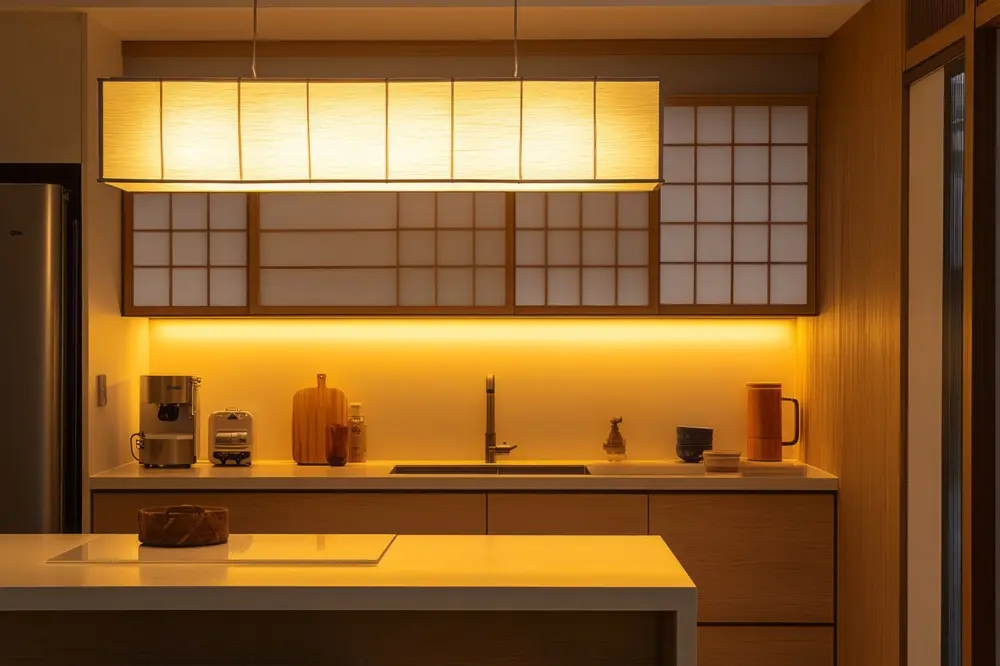
Lighting is key to the Japandi mood in the dry kitchen. Warm, indirect lighting such as pendant lamps or wall sconces with washi paper shades, creates a soft, diffused glow, enhancing the sense of calm and making the space comfortable for both cooking and socializing. Wooden stools and simple chairs placed near the island or countertop invite family members and guests to linger, encouraging casual conversations or tea breaks. Decorative touches, including handmade ceramic plates, linen towels, wooden cutting boards, and subtle wall art like framed postcards or hanging scrolls, add personality without creating visual clutter.
5. Japandi Tea Corner and Hospitality
The dry kitchen can also double as a charming tea corner, perfect for welcoming guests. Displaying Japandi-style tableware, such as ceramic teapots, bamboo trays, and minimalist stoneware cups—creates a warm, welcoming space for guests, blending Japanese elegance with Malaysian hospitality.
Examples of Stylish Japandi Wet and Dry Kitchens
Across Malaysia, homeowners are creatively applying Japandi principles to both compact apartments and larger landed homes, achieving functional yet visually calming kitchens. The versatility of the style allows it to adapt to different layouts, sizes, and personal tastes while maintaining its signature balance of simplicity and warmth.
Modern Japandi Kitchen
A modern Japandi kitchen combines sleek lines with soft natural materials. Cabinets with hidden handles and integrated appliances create an uncluttered, streamlined look, while countertops in matte stone or wood finishes add subtle texture. Soft, diffused lighting enhances the calm atmosphere, ensuring the kitchen feels welcoming without being stark. This style is especially effective in open-plan homes, where the kitchen naturally flows into the living or dining areas, maintaining cohesion throughout the space.
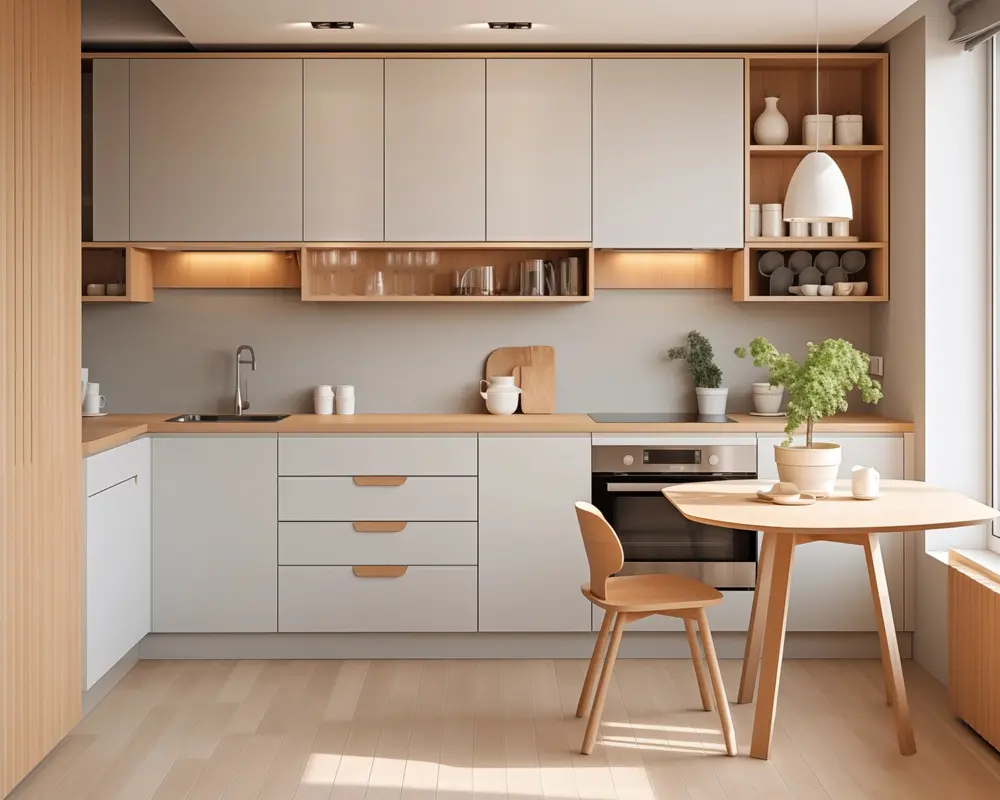
Compact Japandi Kitchen
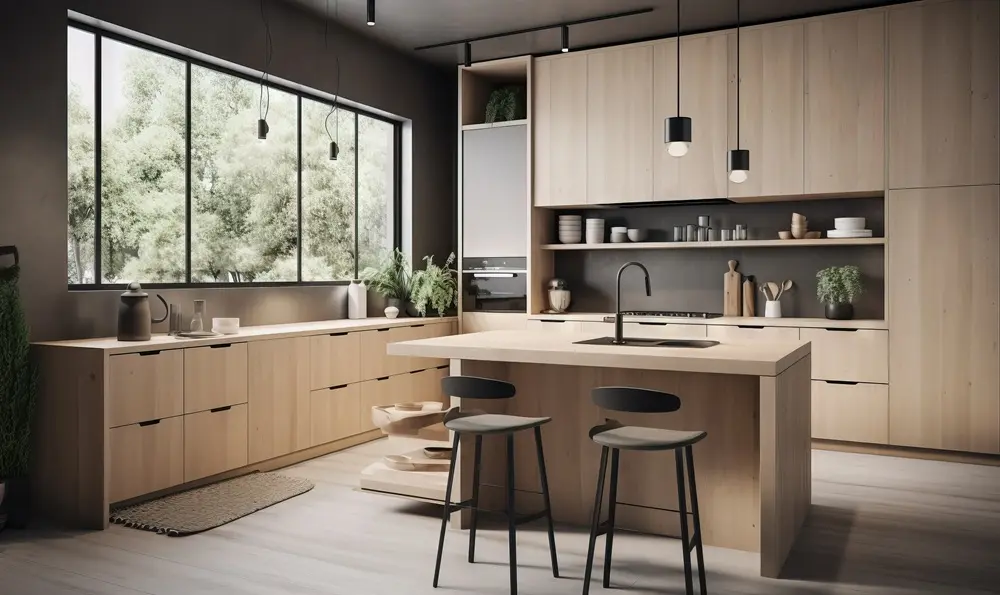
A modern Japandi kitchen combines sleek lines with soft natural materials. Cabinets with hidden handles and integrated appliances create an uncluttered, streamlined look, while countertops in matte stone or wood finishes add subtle texture. Soft, diffused lighting enhances the calm atmosphere, ensuring the kitchen feels welcoming without being stark. This style is especially effective in open-plan homes, where the kitchen naturally flows into the living or dining areas, maintaining cohesion throughout the space.
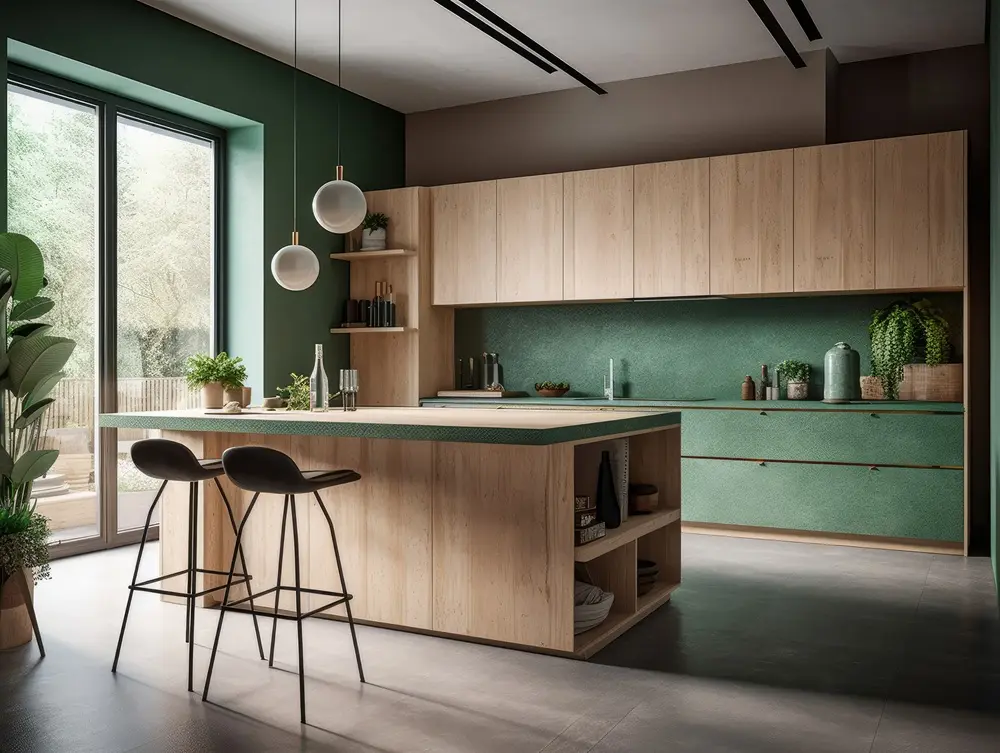
Colorful Kitchen
While most Japandi interiors favor muted tones, selective use of color can personalize the space while preserving harmony. Soft hues, such as sage green cabinetry, navy backsplash tiles, or terracotta accent walls, add vibrancy without overwhelming the neutral foundation. These touches inject warmth and character, making the kitchen feel more inviting while staying true to the Japandi ethos of minimalism and balance. Such designs work well in Malaysian homes where homeowners seek a blend of calm simplicity and expressive creativity.
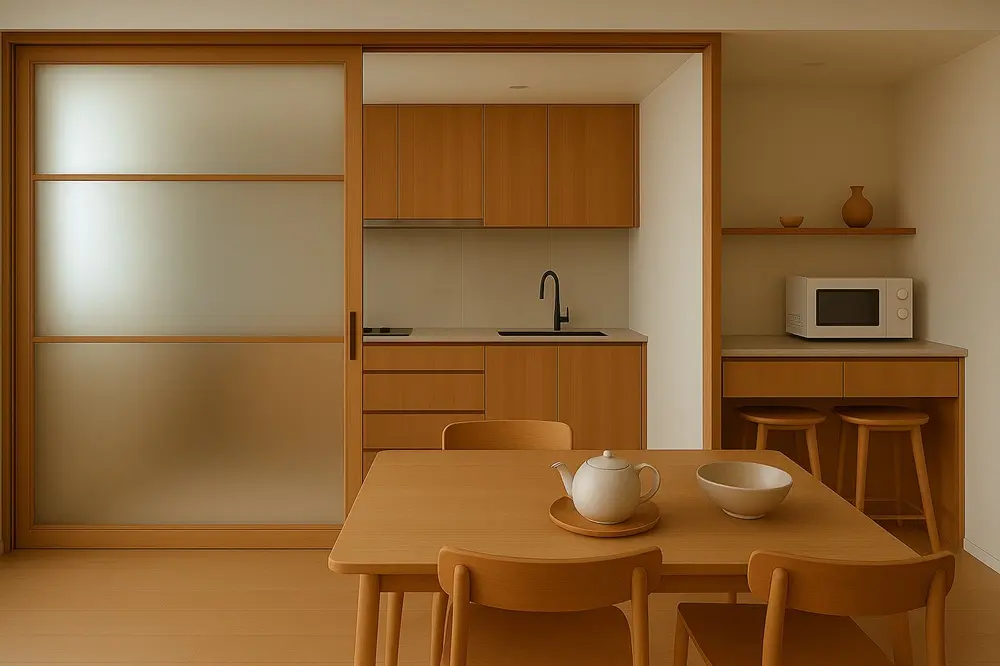
Harmonized Design for Wet and Dry Kitchens
In many Malaysian homes, the most striking Japandi kitchens are those where the wet and dry areas are visually connected. A consistent palette of wood, stone, and soft neutrals creates unity, while sliding glass partitions or frosted panels maintain separation for practical use. This approach allows for heavy cooking in the wet kitchen, while the dry kitchen retains a serene and inviting atmosphere for dining, entertaining, or enjoying a tea break. The result is a cohesive, balanced environment that maximizes both practicality and aesthetic appeal.
These examples illustrate the flexibility of Japandi design in Malaysian homes, showing that whether you prefer sleek modernity, compact efficiency, subtle color accents, or a fully harmonized wet-dry layout, the style can adapt to meet diverse needs while creating a tranquil, functional kitchen environment.
Bringing Balance to Malaysian Kitchens
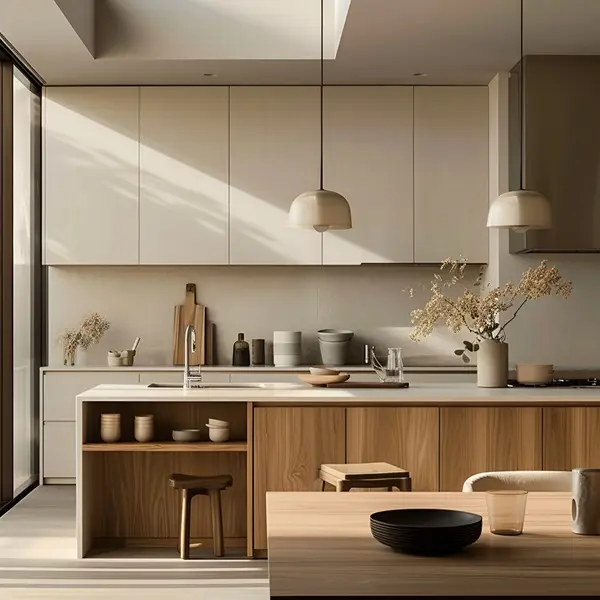
A Japandi kitchen is more than a design trend, it reflects a lifestyle that blends Japanese simplicity with Scandinavian functionality, creating spaces that are both serene and practical. Whether in an open-plan apartment in Kuala Lumpur or a landed home in Penang, this style transforms kitchens into calm, organized, and functional areas. With natural materials, soft colors, and thoughtful organization, a Japandi kitchen transforms everyday cooking and social interactions into moments of mindful living, offering a sense of serenity that suits homes in any climate or culture.
*Some of the images featured in this article were created using generative AI.