

Designing a Japandi Laundry Room in Your HDB: Beauty Meets Function
- The HDB Service Yard: A Common Design Challenge
- What is Japandi? Bringing Harmony to Your Home
- The Japandi Laundry Room: Essential Design Elements
- A Cohesive Laundry Space Inspired by Japandi-Style Design
- Functional Planning in the Laundry Room
- Elevating Everyday Rituals: Styling Accessories with Intent
- Creating a Laundry Space That Feels Like Home
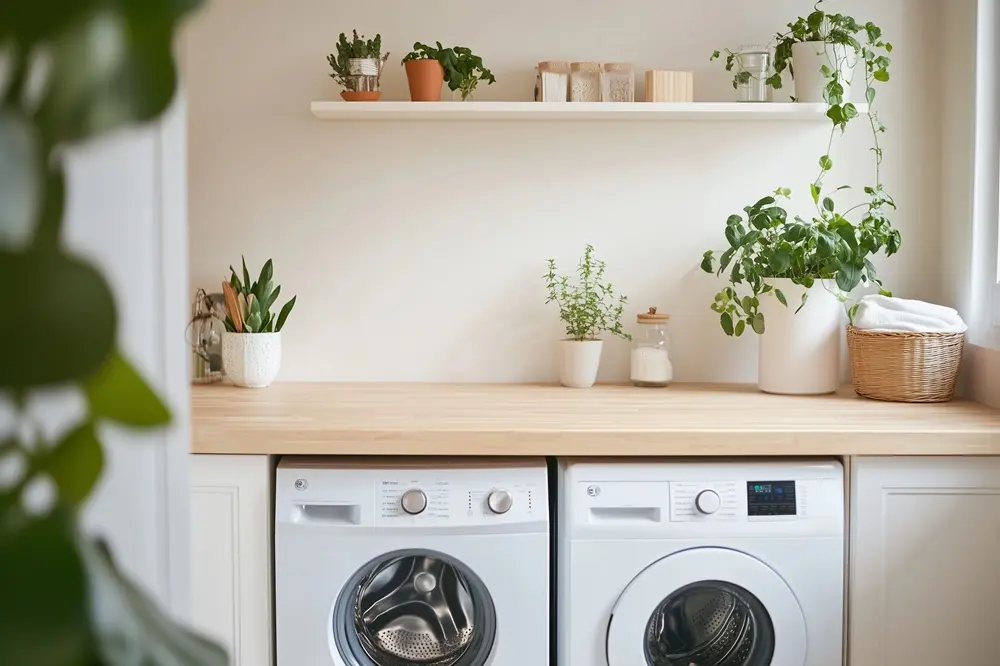
Japandi—a harmonious blend of Japanese minimalism and Scandinavian warmth, can transform even the most utilitarian corners of your home. In HDB flats, laundry areas are often tucked away in service yards, small utility zones usually adjacent to the kitchen, used for washing, drying, and storing cleaning supplies. These spaces are typically overlooked, seen as purely functional and disconnected from the rest of the home.
By applying Japandi principles—clean lines, natural materials, and thoughtful layouts, a compact service yard can become a calm, organized, and visually appealing space. With this approach, everyday chores feel more effortless, and the laundry area becomes a seamless extension of your home rather than just a work zone.
The HDB Service Yard: A Common Design Challenge
In many HDB homes, the service yard is treated as a purely functional space and often feels disconnected from the rest of the living areas. In essence, a service yard is a small utility area typically adjacent to the kitchen, designed for laundry, storage of cleaning supplies, and other household tasks. It may be separated from the kitchen by partition doors, with large windows that allow natural light and ventilation.
These spaces are usually compact, clutter-prone, and underutilized, making thoughtful design a challenge. However, by applying the same attention to aesthetics and flow used in the main areas of your home, the laundry area can become a seamless extension of the living space.
What is Japandi? Bringing Harmony to Your Home
Japandi blends Scandinavian functionality with Japanese design principles, including the wabi-sabi philosophy, which values simplicity, natural imperfection, and authenticity. Rather than stark minimalism, it embraces a simple and restrained aesthetic, focusing on what truly matters in a space.
Why It's Perfect for Compact Utility Areas
With clean lines, light tones, and clutter-free design, Japandi is ideal for small, high-use areas like HDB service yards. It creates a sense of openness while ensuring every element serves a clear function. For example, a simple wooden countertop for folding clothes, paired with neutral cabinetry, can make even a compact space feel organized and inviting.
The Japandi Laundry Room: Essential Design Elements
A successful Japandi laundry room balances minimalism with tactile warmth. Start with simplicity, introduce natural textures, and layer subtle contrasts to make the space both functional and visually calming.
Simplicity and Functionality: The Foundation
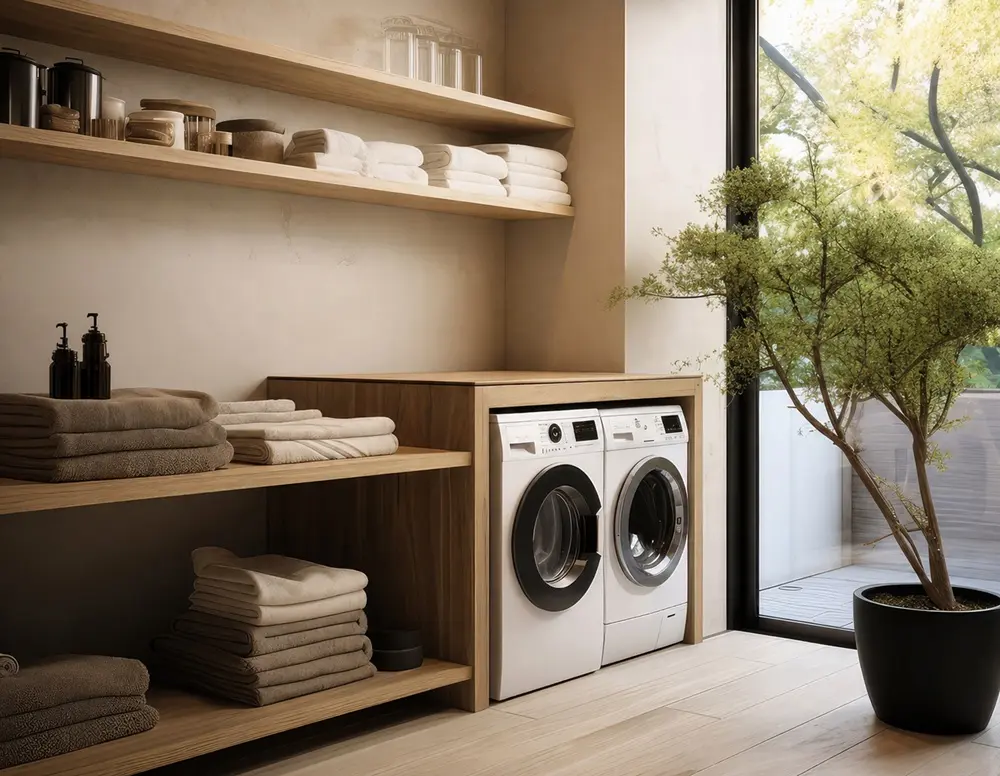
A Japandi laundry room begins with removing the unnecessary. Every element should serve a purpose, with tools and supplies kept neatly out of sight to maintain a clean and uncluttered environment. For instance, instead of leaving detergents on countertops, store them in matching containers or inside cabinetry to maintain visual calm.
Neutral and Earthy Color Palettes
Stick to a restrained palette of soft whites, warm greys, and beige tones. This creates a calming backdrop that visually connects the laundry area with the rest of the home. Small accents, such as a woven rattan basket or a cement planter, add texture without overwhelming the palette.
Natural Materials and Textures
Choose materials carefully to set the foundation of your Japandi laundry space. Light woods, matte stone, bamboo, and natural fibers each bring unique qualities: warmth, tactility, durability, and visual calm. Selecting materials with inherent texture and subtle variation ensures the space feels inviting, grounded, and resilient to everyday wear. For example, wooden cabinet fronts can soften the look of utility areas, while matte stone countertops provide a durable, understated surface that resists scratches and moisture.
Contrast and Texture: Adding Soul
Once you have chosen your materials, combining them thoughtfully creates depth and personality. Pair smooth, matte stone with warm wood grain, or layer bamboo baskets and cotton textiles to prevent the space from feeling flat. Introducing subtle contrasts—hard vs. soft, smooth vs. tactile, light vs. slightly darker tones, adds visual interest while preserving Japandi's calm, restrained aesthetic. Small touches, like a ceramic tray for laundry accessories, reinforce this intentional, textural harmony.
A Cohesive Laundry Space Inspired by Japandi-Style Design
A well-designed Japandi laundry room feels integrated and visually harmonious, whether the kitchen shares the same style or not.
Visual Continuity Across the Home
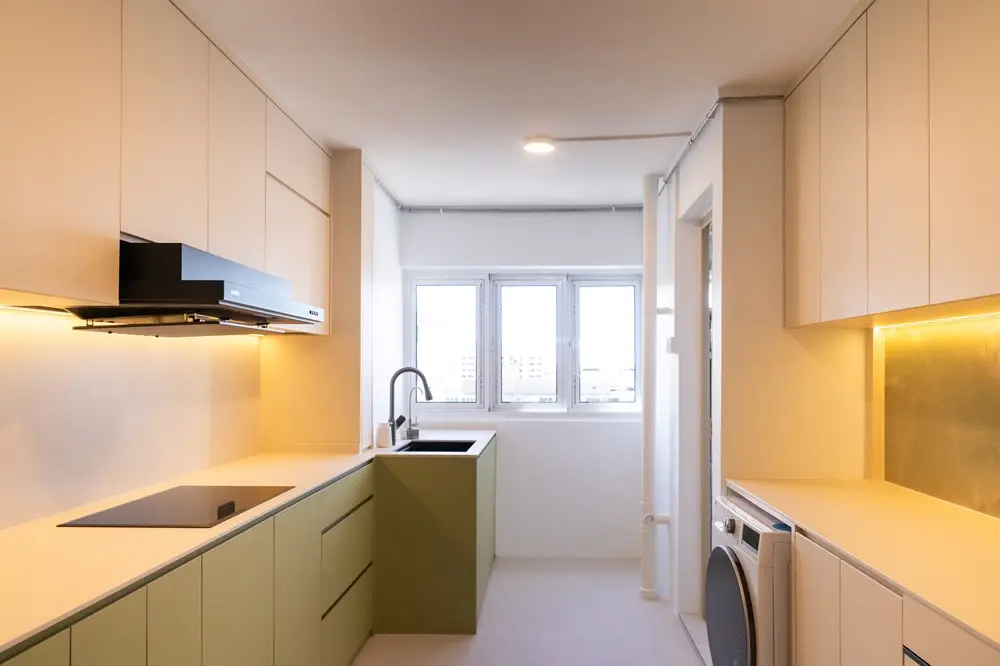
A well-designed Japandi laundry room should speak a common visual language with other areas of the house. Maintain a consistent design language across flooring, cabinetry, and finishes so the laundry area feels like a natural extension of the home rather than a separate zone.
If your kitchen is Japandi, extend its palette—soft whites, warm greys, and beige tones into the laundry area for a seamless flow. Continue natural materials like light wood and matte stone, and layer subtle contrasts to maintain quiet continuity.
If your kitchen follows a different style, avoid forcing a match. Instead, create a calm, independent palette using neutral, earthy tones such as off-white, taupe, or muted grey. Introduce natural textures like stone or wood, and build contrast within the space itself to achieve a cohesive, minimalist look.
Natural, Enduring Materials for a Calming Look
A Japandi laundry space feels calming and grounded through the use of natural-looking, enduring materials. Surfaces such as matte stone, light-toned wood, or bamboo-inspired finishes bring a quiet warmth while maintaining a clean, understated look.
Beyond aesthetics, these materials are chosen for how well they age in Singapore's humid climate. Quartz countertops, water-resistant laminates, laminate cabinetry with water-resistant finishes and treated wood finishes retain their appearance over time, allowing the space to remain serene and uncluttered.
Soft, Layered Lighting for a Serene Atmosphere
Lighting plays a key role in shaping the mood of a Japandi laundry area. Rather than harsh brightness, aim for a soft, diffused glow that enhances the space's sense of calm.
Ideally, layered lighting works best: ambient lighting sets the overall tone, while subtle task lighting over the washer, dryer, or folding area provides focused visibility without disrupting visual harmony.
If a layered setup is not practical—especially in compact spaces, a single neutral-warm light (around 3500–4000K) can serve as a balanced alternative. This approach offers sufficient brightness for daily tasks while maintaining a gentle, inviting atmosphere. When paired with natural light from windows or a balcony, the space remains calm, functional, and visually cohesive.
Functional Planning in the Laundry Room
Efficiency is key in compact HDB service yards. Thoughtful layout and workflow ensure chores are smooth while the space remains uncluttered.
Efficient Flow & Ergonomics
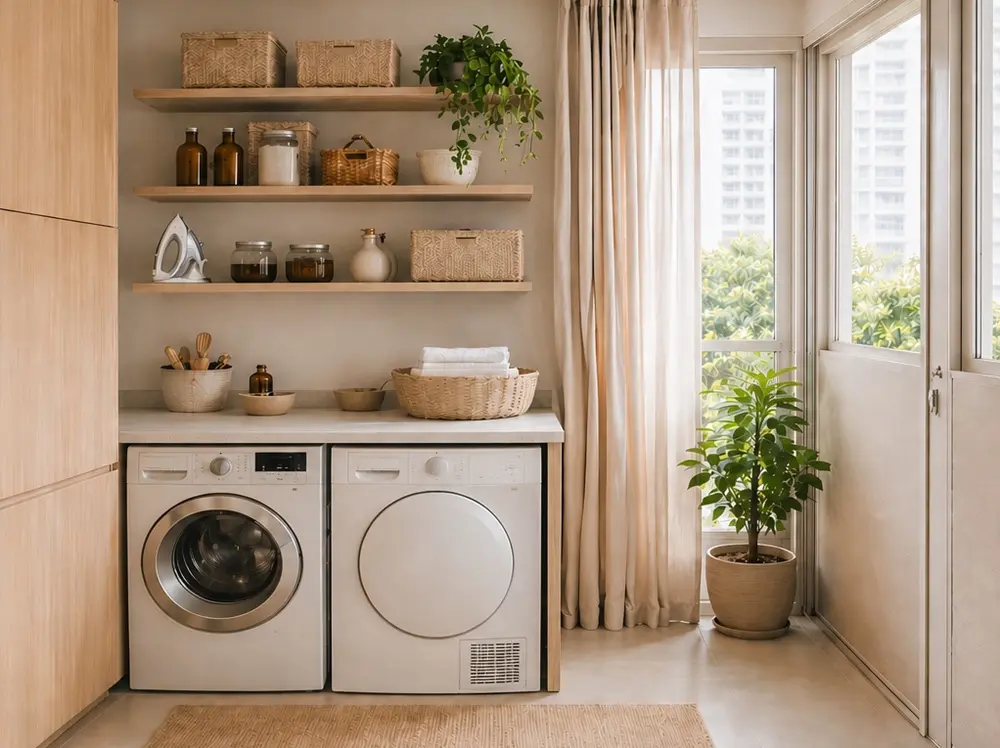
A well-designed Japandi laundry room considers both the movement between spaces and within the laundry area itself. Aim to reduce unnecessary steps between the kitchen and service yard, while keeping the layout open and unobstructed. Position key elements like the washer, dryer, and storage within easy reach, but avoid placing bulky appliances directly at the entrance where they may interrupt circulation.
Within the laundry area, organise appliances and work surfaces to create a logical workflow: washing → drying → folding → storage. Place the washer and dryer close together or stack them vertically to free floor space. Include a small, dedicated folding counter or ledge near the dryer for sorting and folding clothes immediately after drying. Keep frequently used items, such as detergents, clothespins, and laundry baskets, within arm's reach to reduce unnecessary movement. Clear floor space for manoeuvring baskets and trays prevents congestion, making chores smoother, faster, and more ergonomic.
Smart Storage
Use a combination of closed cabinetry and open storage to balance orderliness with ease of use. Closed cabinets are ideal for concealing bulkier or less frequently used items—such as detergents, cleaning tools, ironing equipment, and spare laundry baskets—keeping the space visually calm and uncluttered.
Open storage ensures daily essentials remain within easy reach. Use shelves, niches, or compartments for frequently used items like clothespins, small baskets, or folded towels. This combination allows you to achieve both order and usability, preventing the space from feeling cramped or overly rigid.
Consider integrating storage solutions that double as functional design features: woven baskets for texture, or hanging rails for drying small garments.
Maximizing Space
Maximise both vertical and horizontal storage to make the most of a compact HDB service yard. Tall cabinets, wall-mounted shelving, and overhead storage free up floor space for movement and folding areas. Concealed workflow zones, such as pull-out counters, sliding panels, or fold-down surfaces, allow folding, sorting, or ironing areas to remain tidy when not in use.
Position tall cabinets along one wall to maximise storage without blocking light or workflow, while leaving floor space in front of the washer/dryer for folding and sorting. Overhead shelves or wall-mounted units above appliances make use of vertical space efficiently.
Elevating Everyday Rituals: Styling Accessories with Intent
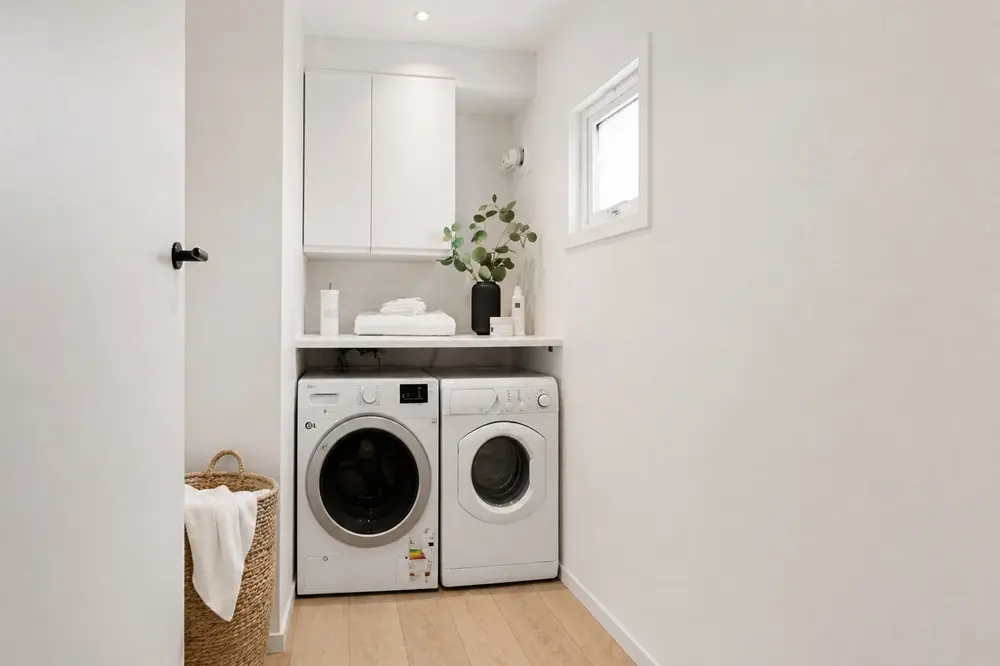
Even in a small laundry area, thoughtful styling can make daily chores feel more intentional and enjoyable. By selecting accessories that are both functional and visually harmonious, you can maintain a calm, cohesive environment while making everyday tasks easier.
Stylish and Functional Laundry Accessories
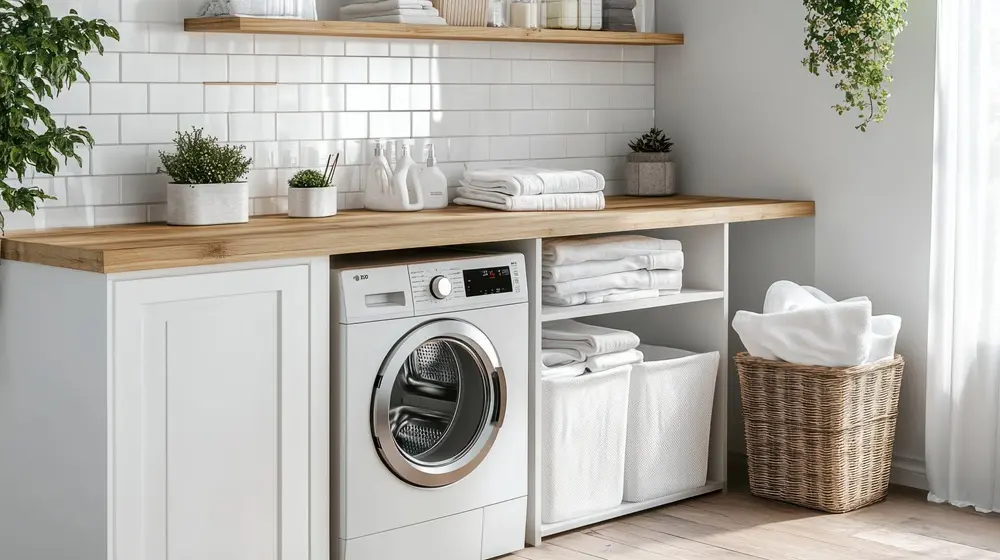
Choose storage and containers that are practical and visually cohesive. Woven rattan or seagrass baskets add texture and warmth, while cotton or hemp hampers in neutral tones tuck easily under counters. Structured baskets with lids help conceal clutter, and keeping one basket for dirty laundry and another for folded clothes maintains a tidy workflow. Everyday items such as detergents can be transferred into amber glass or matte bottles and grouped neatly on a wooden or ceramic tray. By limiting what's on display and keeping accessories coordinated, the space remains organized, functional, and aesthetically soothing.
Choosing the Right Pots and Planters
Plants bring life and a sense of calm to the laundry area. Select planters that complement the neutral Japandi palette: unglazed ceramic, matte stone, or cement in off-white, sand, or warm grey. For durability in humid conditions, choose fiberglass, coated metal, or resin planters. Avoid glossy plastics or busy patterns; slight imperfections reflect Wabi-Sabi beauty. Examples include a small fern in a matte stone pot on the counter or a trailing pothos in a hanging resin planter.
Creating a Laundry Space That Feels Like Home
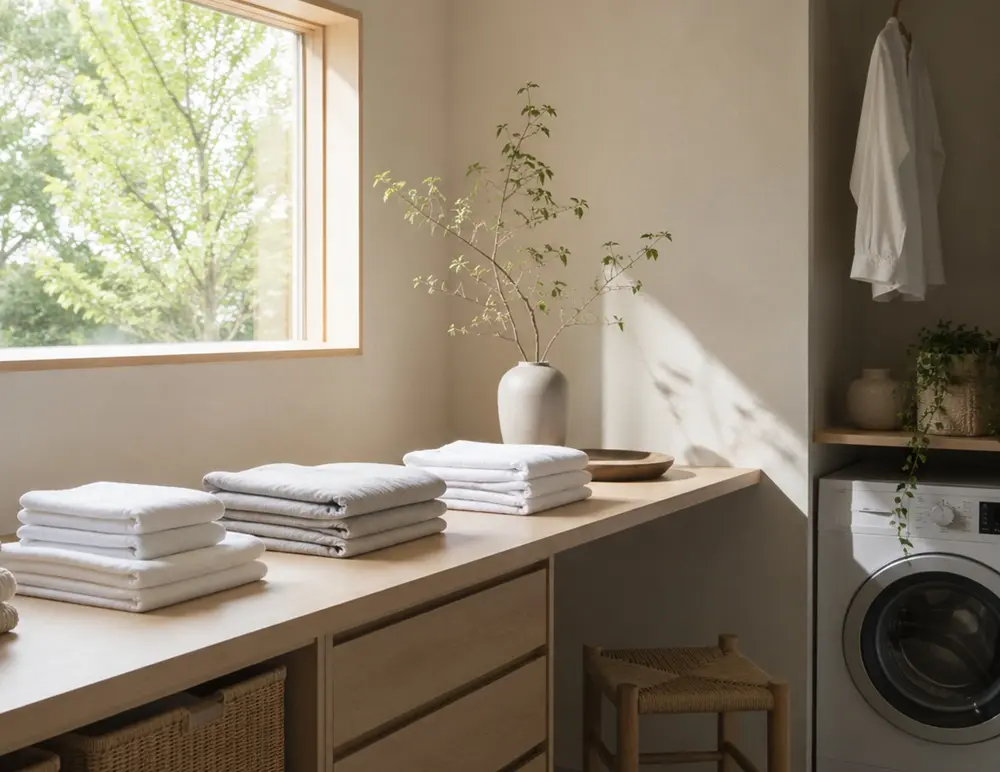
A Japandi laundry room is more than just a functional corner, it is an intentional, calming space that balances beauty and practicality. By applying Japanese and Scandinavian-inspired aesthetics alongside thoughtful workflow design, even the smallest HDB service yard can feel connected, organized, and serene. With natural materials, neutral palettes, well-planned storage, and subtle styling, your laundry space can transform daily chores into quiet, mindful rituals, reflecting the harmony and simplicity that Japandi living brings.
*Some of the images featured in this article were created using generative AI.