

Japandi Home Office Ideas: 10 Design Tips for a Calm, Productive Workspace
- Workspace Planning: Blending Your Home Office into the Living Space
- Basics of Space Design: Choosing Materials and Colors
- Workspace Functionality: Enhancing Comfort and Storage
- Biophilic Elements: Softening the Workspace with Greenery
- Tech Integration: Maintaining a Clean and Quiet Workspace
- Professional Styling: Creating a Calm Visual Presence
- The Impact of a Japandi Home Office on Productivity and Well-Being
- A Multipurpose Japandi Home Office
- Creating a Workspace That Works for You
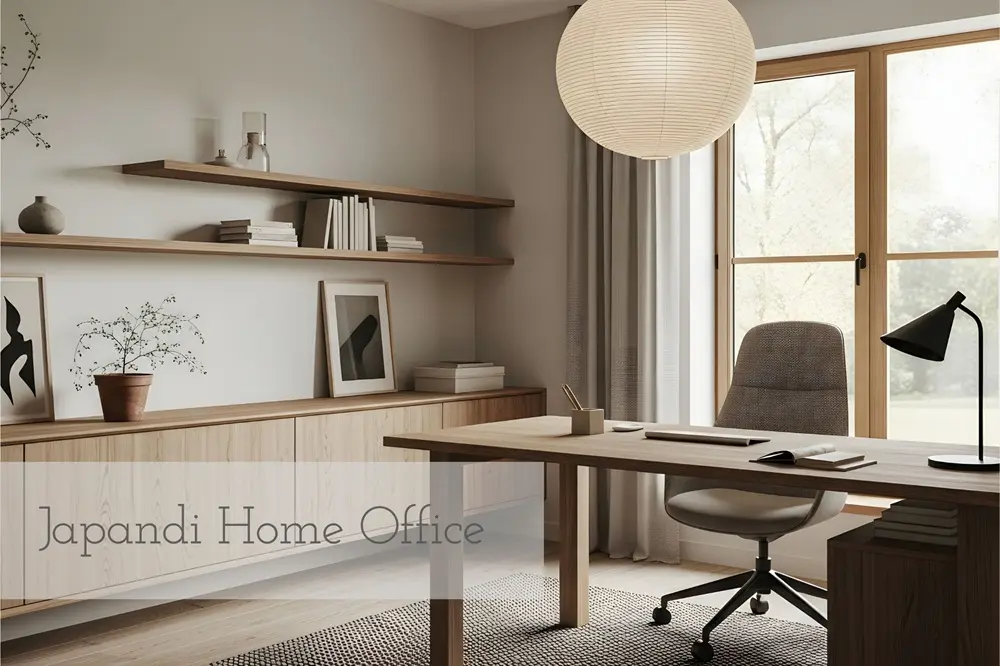
As remote and hybrid work become a lasting part of modern life, the need for a home office that supports both productivity and well-being has never been greater. Yet many workspaces still feel overly functional—detached from the warmth and comfort of the home.
A Japandi home office offers a thoughtful alternative. By blending Scandinavian practicality with Japanese aesthetics, this design approach creates spaces that are calm, intentional, and highly functional. The focus is not just on how a workspace looks, but how it feels and performs throughout the day.
The following 10 tips will guide you in creating a Japandi-inspired home office that balances efficiency with a natural, serene aesthetic.
Workspace Planning: Blending Your Home Office into the Living Space
Define a workspace that integrates visually and functionally with the surrounding home environment.
1. Space Planning: Limiting Furniture to the Essentials
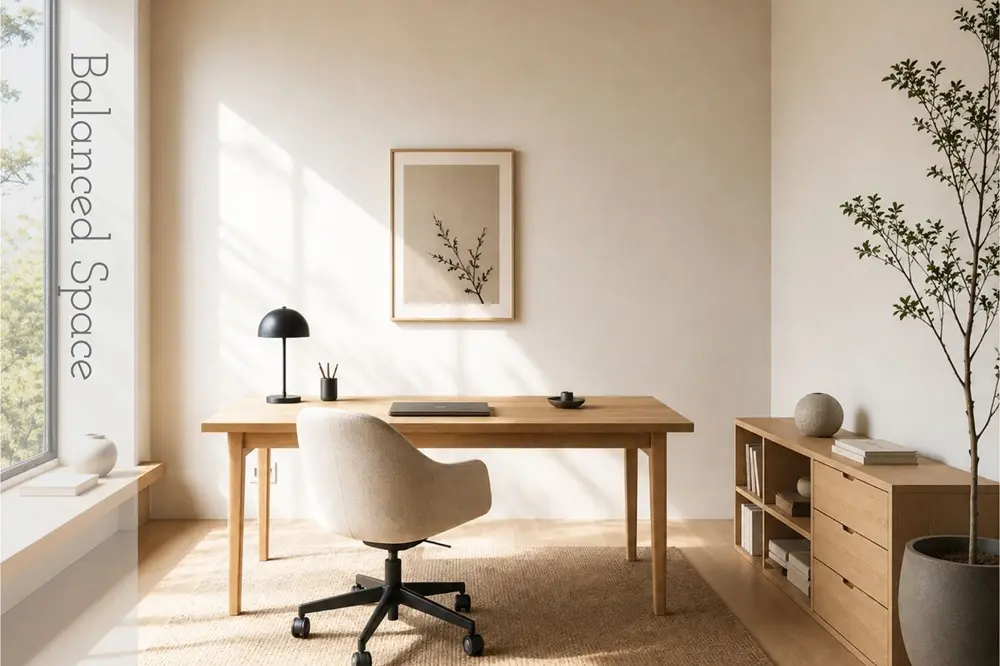
A Japandi home office begins with restraint. Rather than filling the room with excessive furniture or storage, focus only on the essentials needed for daily work—typically a desk, an ergonomic chair, and minimal storage. Leaving areas intentionally open creates visual breathing room, allowing the workspace to feel calm, balanced, and easier to navigate.
This slightly understated approach is central to the Japandi aesthetic. By reducing unnecessary furniture and avoiding overcrowded layouts, the workspace feels lighter and less mentally demanding, helping to support focus throughout the day. A simplified setup also allows natural materials, soft textures, and subtle details to stand out more clearly, creating an environment that feels both functional and restorative.
Basics of Space Design: Choosing Materials and Colors
Establish a cohesive foundation through restrained material selection and a balanced color palette.
2. Material Selection: Building Around Natural Textures
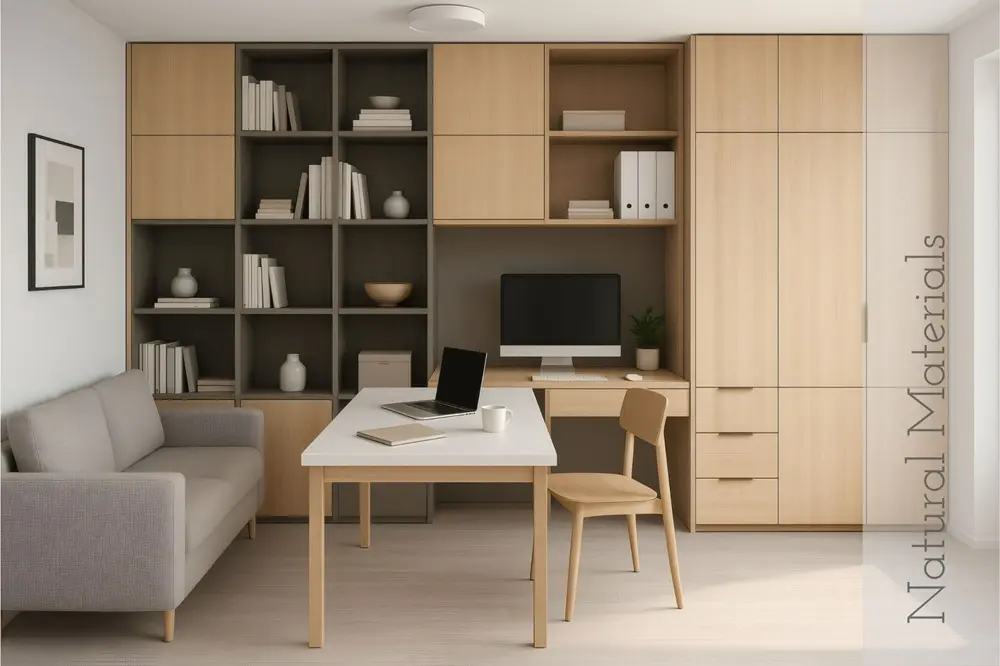
Natural materials form the backbone of a Japandi workspace, grounding the design in authenticity and warmth. Light woods such as oak or ash are particularly effective in creating a bright and airy atmosphere, while their subtle grain adds visual interest without overwhelming the space. Pairing these with tactile materials like linen or bouclé—a textured fabric woven with looped threads, introduces softness and depth, making the workspace feel more comfortable and lived-in.This thoughtful combination of materials helps counterbalance the rigidity of typical office furniture, resulting in an environment that feels both functional and welcoming.
3. Color Palette: Creating a Calm, Earthy Foundation
A restrained color palette is essential in establishing the tranquil mood associated with Japandi interiors. Base tones such as oatmeal, sand, and warm beige create a neutral foundation that reflects light gently and promotes a sense of openness. These can be complemented with understated accents like charcoal grey or muted olive, which add depth without disrupting the overall harmony. By limiting the number of colors and avoiding overly bold contrasts, the workspace maintains a cohesive and uncluttered appearance that supports focus and reduces visual fatigue throughout the day.
Workspace Functionality: Enhancing Comfort and Storage
Support daily productivity through ergonomic comfort and well-considered storage solutions.
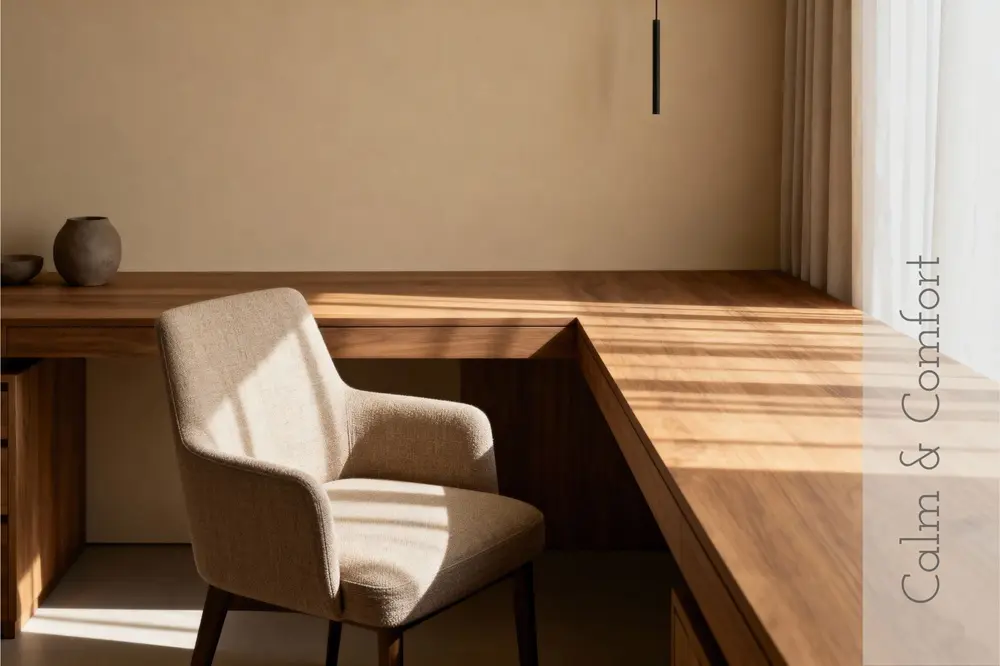
4. Seating Design: Choosing an Ergonomic Chair with a Soft Profile
An ergonomic chair is a necessity for long hours of work, but in a Japandi home office, it should also contribute to the overall aesthetic. Chairs with slim silhouettes, light wood elements, and neutral upholstery provide the necessary support while maintaining visual lightness. Even when opting for more technical materials such as steel or resin, selecting subdued tones like black, white, or soft grey help keep the chair understated. Chairs in white or grey blend especially well into the interior, reinforcing a light and cohesive atmosphere. If black is introduced, it should be balanced by echoing it in subtle accents like lighting, frames, or accessories. Functional features such as height adjustment, reclining, or casters can be integrated discreetly, ensuring comfort without disrupting the calm, cohesive design.
5. Storage Styling: Curating a Minimalist Bookshelf
A Japandi bookshelf is not just for storage but also serves as a visual anchor within the workspace. Instead of filling every shelf, a curated approach allows each item to stand out while contributing to an overall sense of balance. Combining professional materials like books and files with personal objects such as ceramics or small decorative pieces adds character without excess. The intentional use of empty space between items is equally important, as it prevents the shelf from feeling crowded and reinforces the minimalist philosophy that defines Japandi interiors.
6. Organization System: Keeping Work Tools Out of Sight
A well-organized workspace is essential for both efficiency and visual clarity, and in Japandi design, this often means keeping functional items discreetly hidden. Using uniform folders in muted tones helps create a consistent and harmonious look, while subtle labeling ensures that documents remain easy to locate. Smaller items such as stationery can be stored in textured containers made from materials like wood, rattan, or washi paper, which soften the presence of technology. Incorporating a mobile pedestal that fits neatly under the desk further enhances organization by providing accessible storage without disrupting the clean lines of the workspace.
Biophilic Elements: Softening the Workspace with Greenery
Introduce natural elements to create visual softness and a more grounded working environment.
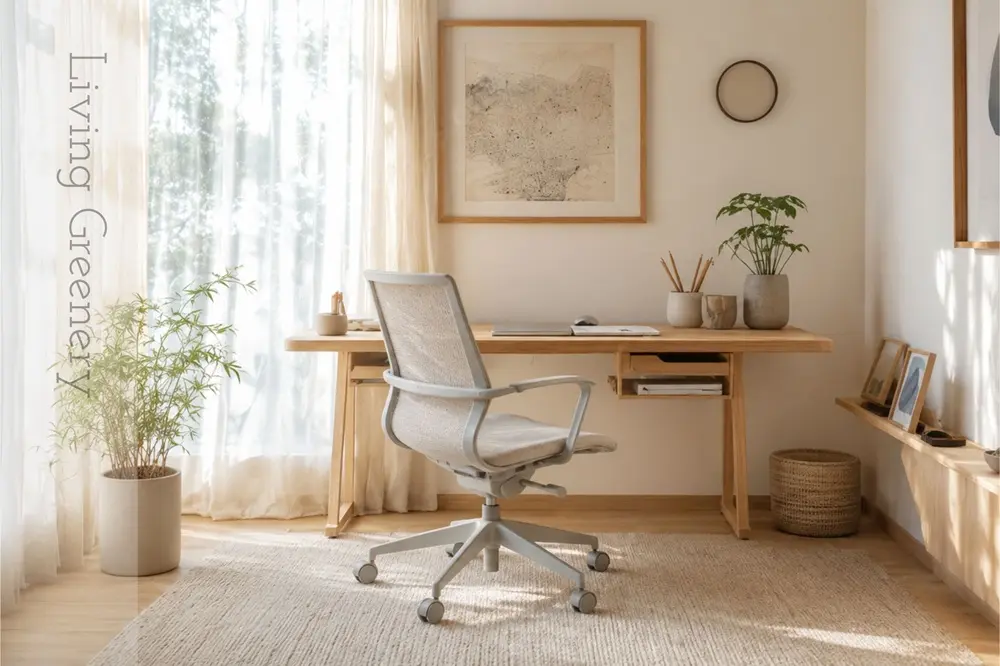
7. Plant Styling: Adding Minimalist Greenery
Greenery introduces a natural element that softens the structured lines of a workspace and creates a subtle connection to the outdoors. In a Japandi home office, the emphasis is on simplicity and restraint, so a single plant with a clean, sculptural form is often sufficient. Options such as a bonsai, a small ficus, or a simple leafy plant can add life without overwhelming the desk. Beyond enhancing the visual appeal, greenery also has a calming effect on the mind, helping to reduce stress, improve focus, and offer a quiet visual pause during work. It can serve as a gentle reset during busy moments, making the workspace feel more balanced and restorative.
Tech Integration: Maintaining a Clean and Quiet Workspace
Incorporate technology in a way that preserves visual clarity and spatial calm.
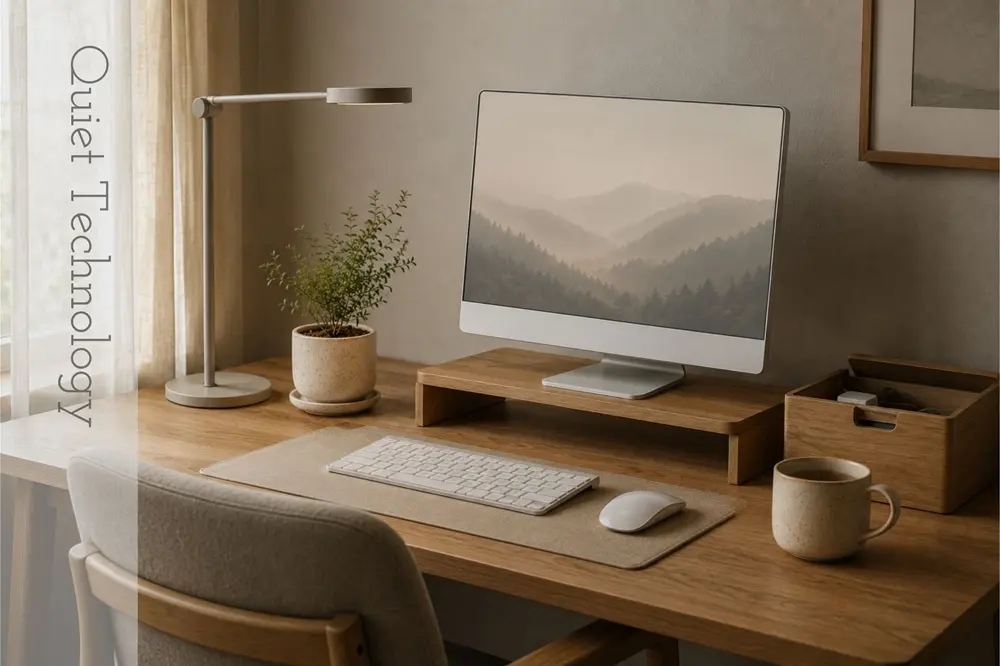
8. Device Placement: Integrating Technology Thoughtfully
Technology is an essential part of any home office, but in a Japandi setting, it should be incorporated in a way that feels unobtrusive. Elevating monitors on slim arms or wooden stands helps free up desk space while maintaining a light and organized appearance. Choosing devices in neutral tones allows them to blend more naturally into the overall palette, reducing visual distraction. By positioning technology thoughtfully and avoiding unnecessary bulk, the workspace retains its calm and cohesive character while remaining fully functional.
9. Cable Management: Concealing Visual Clutter
Visible cables and accessories can quickly disrupt the serenity of a Japandi workspace, making effective cable management a key consideration. Using discreet solutions such as cable clips, under-desk trays, or wooden storage boxes helps keep wires neatly hidden from view. When selecting a desk, opting for one with built-in cable management features—such as hidden compartments or integrated channels, can make a significant difference in maintaining a clean and streamlined look.
Professional Styling: Creating a Calm Visual Presence
Shape a composed and intentional backdrop that supports both focus and professional presentation.
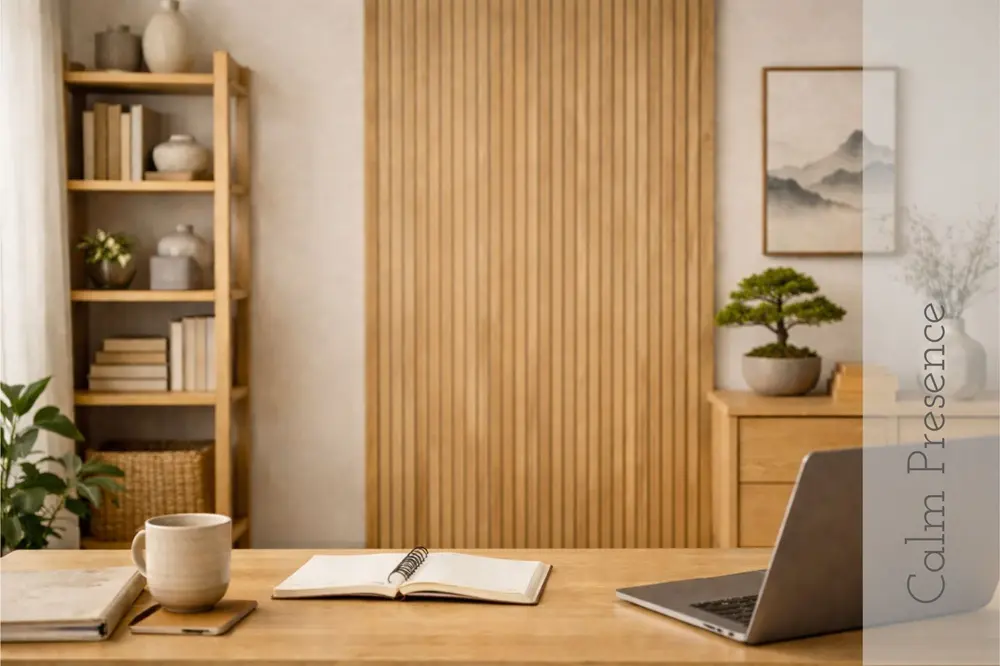
10. Background Composition: Creating a Calm and Intentional Setting
A well-considered background is essential for maintaining a professional presence during virtual meetings. This backdrop should feel like a natural extension of the space, characterised by simplicity and balance. Slatted wood panels offer a refined solution, adding texture without overwhelming the visual field. For smaller spaces, alternatives such as a single tranquil artwork, a small arrangement of plants in handcrafted ceramic pots, a neatly styled shelf, or a neutral fabric backdrop can achieve a similar effect. These elements work together to create a composed and visually pleasing setting that enhances both focus and presentation.
The Impact of a Japandi Home Office on Productivity and Well-Being
A Japandi home office does more than elevate aesthetics—it reshapes how you work. By reducing visual clutter, it minimises distractions and creates an environment that supports sustained focus. The use of natural materials and muted tones contributes to a calming atmosphere, helping to reduce stress and promote mental clarity over long working hours.
Intentional organization further enhances efficiency by making it easier to locate and manage essential items, streamlining daily tasks. At the same time, the integration of natural elements such as wood and greenery fosters a sense of balance and connection to nature. Together, these qualities create a workspace that not only improves productivity but also supports overall well-being in a meaningful and lasting way.
A Multipurpose Japandi Home Office
A home office does not need to be a dedicated room used only for work. In fact, especially in homes with limited space, a Japandi-inspired room can be designed to serve multiple purposes without losing its sense of calm and order. With its restrained palette and uncluttered layout, the space can transition easily beyond work hours.
On weekends, it can become a quiet reading corner, and during breaks, a place to unwind with music or simply step away from the demands of work. Because Japandi interiors are inherently quiet, balanced, and comfortable, they support both focus and relaxation, making the home office a flexible and realistic part of everyday living rather than a single-purpose room.
Creating a Workspace That Works for You
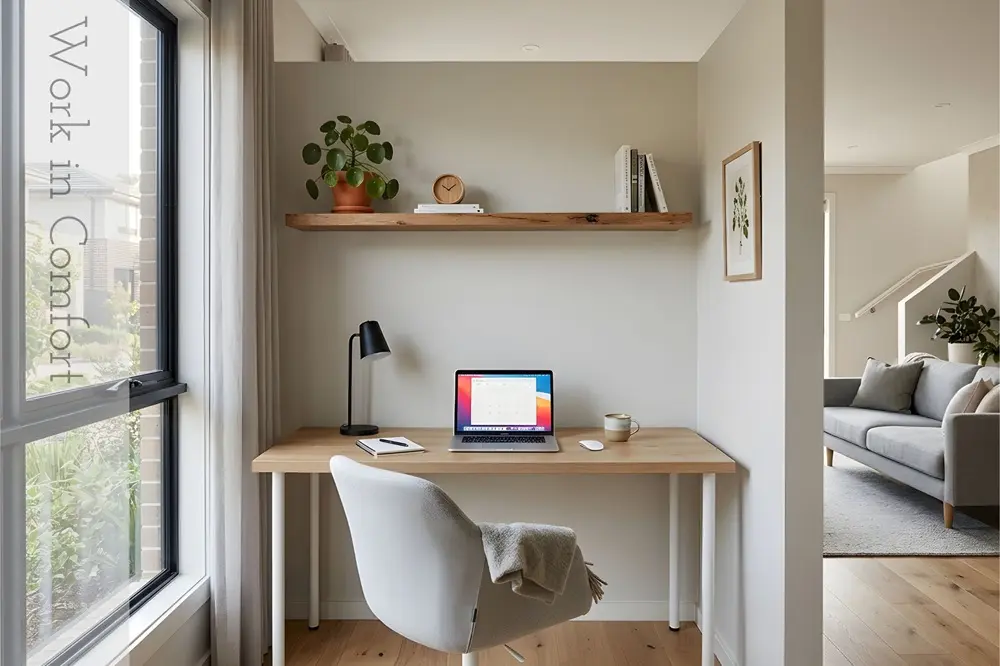
A Japandi home office is ultimately about achieving balance between function and comfort, simplicity and warmth. By focusing on thoughtful design choices and intentional organization, even a small workspace can be transformed into a calm and supportive environment. Whether you are working with a dedicated room or a compact corner, these principles can help you create a space that feels cohesive, purposeful, and conducive to both productivity and peace of mind.
*Some of the images featured in this article were created using generative AI.