

Exploring Japanese Dishware: Diversity in Shapes, Materials, and Art
- The Philosophy of "Utsuwa":Why Japanese Dishware Is Unique
- Masterful Materials: The Diversity of Japanese Ceramic Tableware
- Form Follows Flavor: The Logical Connection Between Dish and Shape
- The Seasonal Palette: Expressing Nature Through Motifs
- Systematized Variety: The Logic of Size and Smart Storage
- Quiet Logic, Lasting Beauty
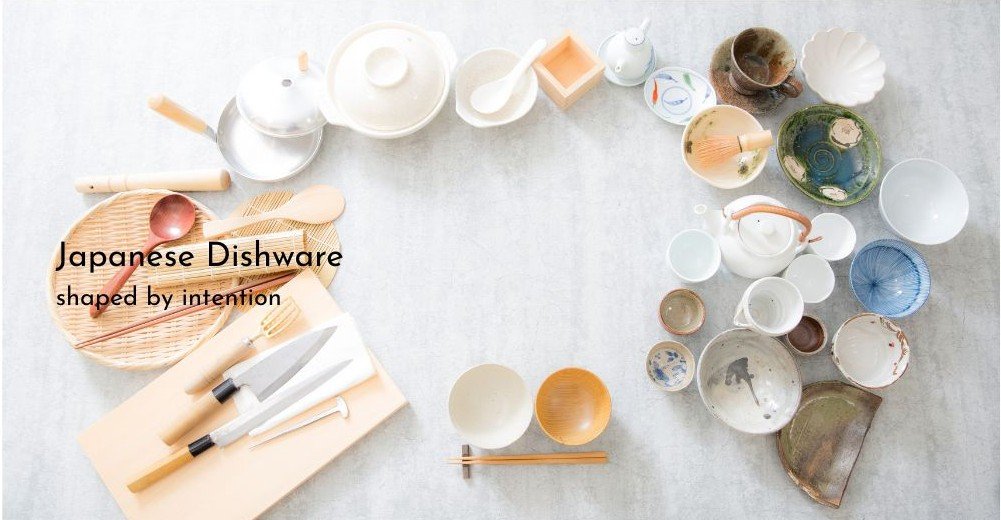
Japanese dishware is not defined by uniformity. Instead, it is shaped by intention—each vessel designed with a clear purpose, informed by food, season, and the human body. From lacquerware bowls that insulate heat to porcelain plates that highlight color and form, Japanese tableware embraces variation, allowing each dish to be presented in the form that best supports its temperature, texture, and visual balance.
Understanding Japanese dishware means understanding utsuwa: vessels created not only to hold food, but to enhance the entire dining experience. The diversity seen on a Japanese table is not decorative excess, but a carefully considered system where beauty emerges from logic and use.
The Philosophy of "Utsuwa":Why Japanese Dishware Is Unique
Utsuwa reflects the Japanese approach to dishware as more than a simple container, ensuring that each vessel supports both the food it holds and the person who uses it.
More Than a Tool: The Connection Between Food and Vessel
In Japanese culture, dishware is understood as an extension of the food itself. The vessel is not merely a container, but a partner that shapes how the meal is experienced. Weight affects how a bowl is lifted, texture influences how it feels against the lips, and material determines how heat or cold is perceived by the hands.
For example, a lacquerware soup bowl retains heat while remaining cool to the touch, allowing hot soup to be enjoyed comfortably. A ceramic plate with a matte glaze softens reflected light, making food appear calmer and more grounded. These considerations demonstrate how utsuwa supports not only function, but also comfort, awareness, and appreciation.
A World of Diversity: Materials and Shapes in Japanese Culture
Japanese cuisine places value on contrast—between hot and cold, soft and crisp, light and rich. Dishware mirrors this philosophy through the use of varied materials and shapes within a single meal. Rather than striving for visual uniformity, harmony is achieved through balance.
This diversity allows each dish to stand on its own while contributing to the overall rhythm of the table. This results in a dining table where contrast is intentional and harmony is achieved through balance, not sameness.
Masterful Materials: The Diversity of Japanese Ceramic Tableware
Materials in Japanese dishware are selected not for decoration alone, but for their functional performance. From the insulating properties of lacquerware to the durability of porcelain and the warmth of pottery, each material plays a specific role in enhancing temperature, texture, and usability at the table.
Lacquerware (Shikki): The Functional Beauty of Insulation
Lacquerware has long been an essential material in Japanese dining, valued for its performance as much as its appearance. Built from layers of natural lacquer applied over a wooden base, lacquerware bowls are remarkably lightweight and durable.
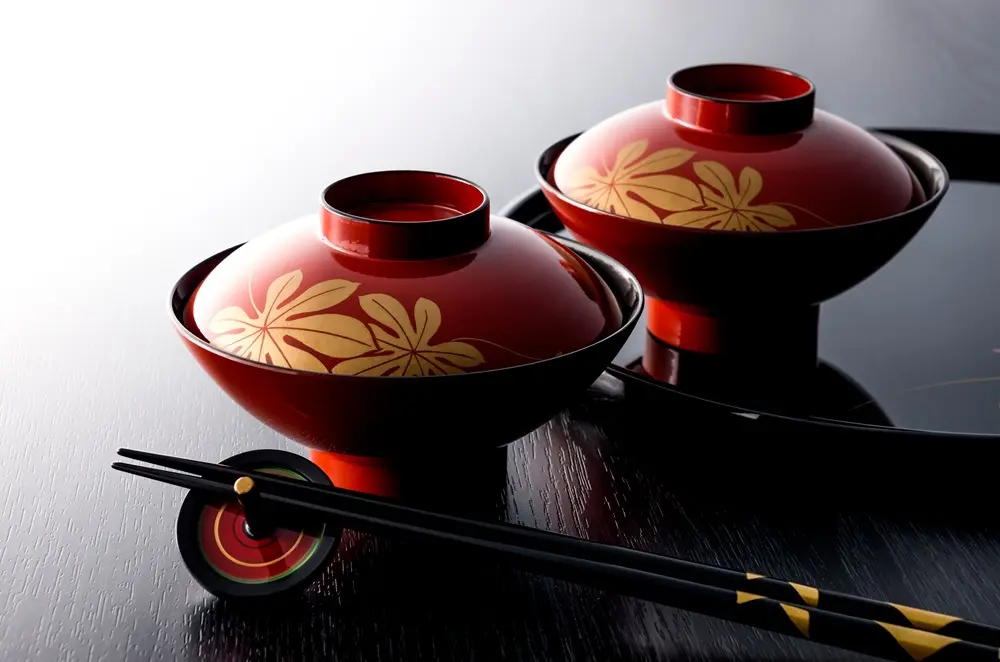
Lacquerware is valued for its durability as much as its appearance. Once cured, natural lacquer forms a hard, protective coating that makes the surface waterproof and resistant to rot. This sealed finish protects the wooden core from moisture absorption and warping, allowing the vessel to withstand daily use. Such properties make lacquerware particularly suitable for serving soup and other hot dishes.
The wood base also provides natural insulation. Compared to many other materials, lacquerware maintains the temperature of hot liquids more effectively while keeping the exterior comfortable to hold. In addition, it absorbs sound, softening contact against the table and creating a quieter dining atmosphere. The smooth surface feels gentle against the lips, supporting a composed and comfortable experience.
Although traditionally associated with vermilion and deep, glossy black, lacquerware today is available in a wider spectrum. By blending pigments into the lacquer, artisans produce brown, green, blue, and white finishes, allowing lacquerware to complement both traditional and contemporary table settings while retaining its functional integrity.
Porcelain (Jiki): Durable and Artistic Japanese Dinnerware
Porcelain is fired at extremely high temperatures, producing a dense, non-porous surface that is both strong and hygienic. This makes it particularly suitable for everyday use, where durability and ease of cleaning are essential.
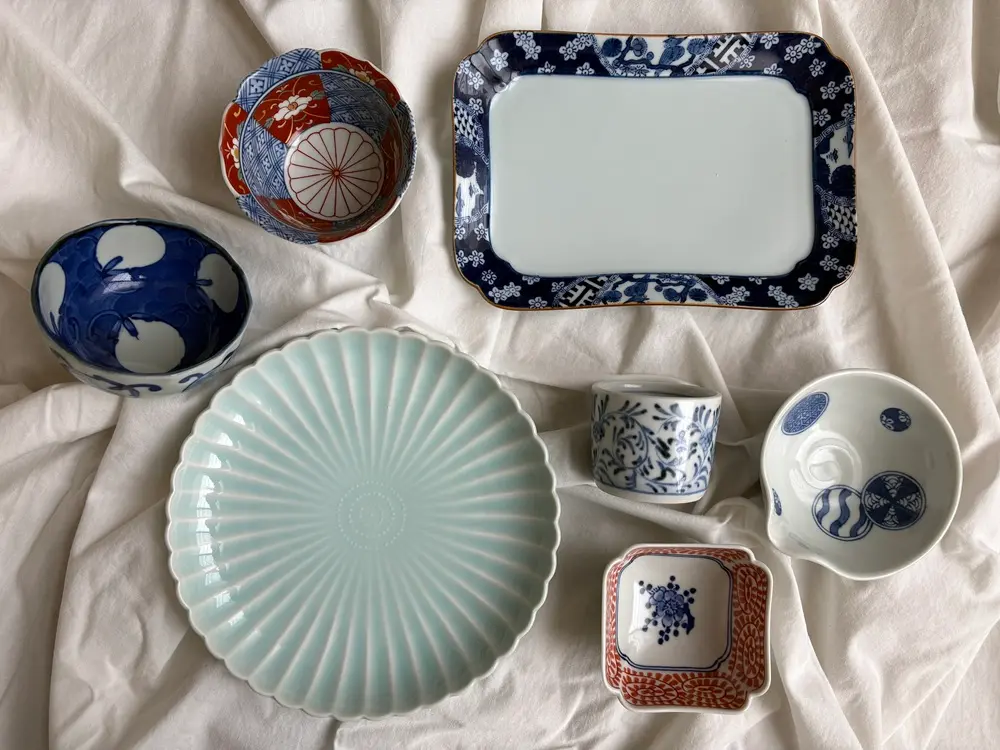
Japanese porcelain is also prized for its ability to showcase intricate designs and vivid colors. Techniques such as iroe overglazing allow artisans to apply detailed patterns without compromising strength. The smooth, refined surface of porcelain allows painted motifs to appear crisp and precise, often drawing attention to the natural hues of the ingredients it holds.
In addition, porcelain designs frequently reflect regional characteristics. Different kiln areas developed distinct palettes, brushwork styles, and decorative motifs influenced by local materials, history, and aesthetic preferences. As a result, porcelain vessels not only serve a functional role at the table but also express the identity of the place in which they were made.
Pottery (Toki): Embracing Earthy Warmth and Seasonality
Pottery offers a more tactile and expressive alternative to porcelain. Fired at lower temperatures, pottery retains subtle irregularities in shape and surface, giving each piece a sense of individuality.
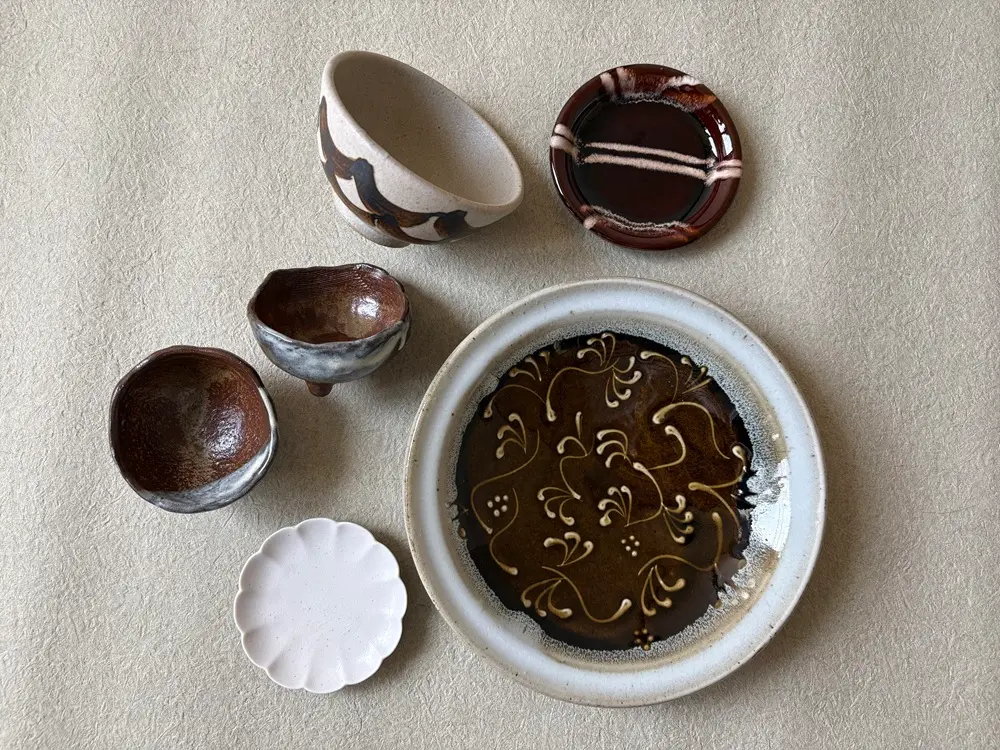
Thicker walls and trapped air pockets allow pottery to retain heat effectively, making it ideal for simmered or slow-cooked dishes. The natural textures and muted glazes often reflect the seasons, aligning with the Japanese appreciation for imperfection and transience known as wabi-sabi. A glaze is a liquid coating of minerals and metal oxides applied to the pottery surface before firing; it melts during the firing process to create a smooth, often colored or glossy finish that can protect the vessel and enhance its visual appeal.
Pottery is also highly reflective of regional differences. Clay types vary by location, and local minerals are often used to create glazes, resulting in distinctive textures, colors, and finishes that tell the story of their origin.
Other Essential Materials: Enhancing the Dining Experience
Beyond ceramics, Japanese dining incorporates a wide range of materials, each chosen for specific qualities. Glass is commonly used in summer, as its transparency and cool touch visually refresh the table and complement fresh dishes such as sashimi. Wood provides natural warmth and subtle insulation, making it ideal for bowls and serving pieces.
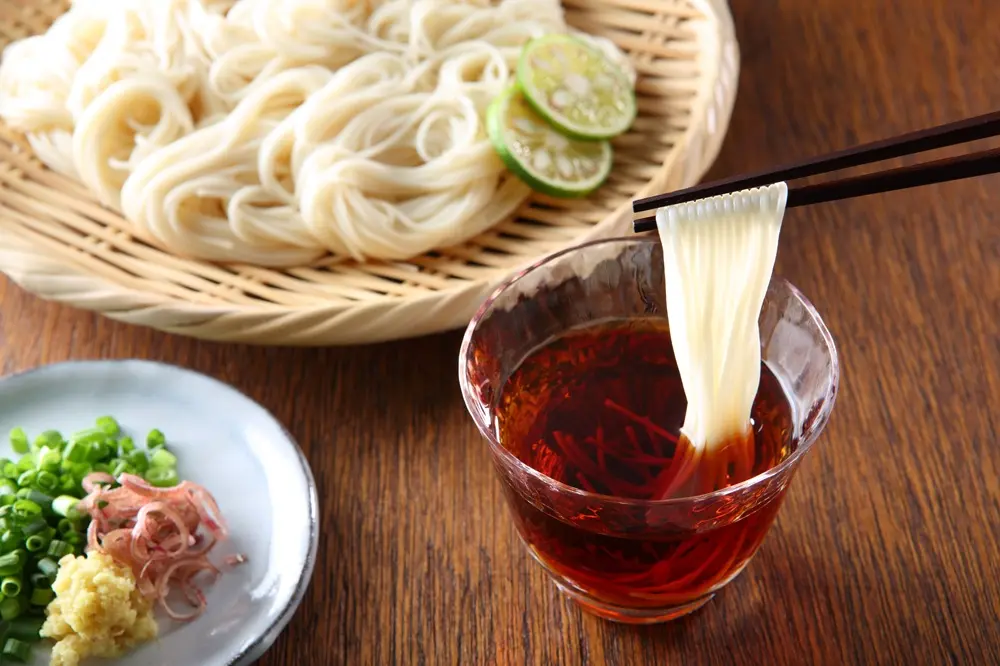
Bamboo becomes breathable when split into thin strips and woven or braided, making it suitable for steaming and draining water. Metal introduces a contemporary contrast, with tin (suzu) traditionally used for sake vessels due to its ability to soften flavor. Rattan adds organic texture and insulation, often appearing in teapot handles to protect the hands from heat.
Form Follows Flavor: The Logical Connection Between Dish and Shape
The shapes of Japanese dishware are closely tied to how food is prepared, served, and eaten. Traditional meal structures such as ichiju-sansai require a range of vessel forms, each designed to support comfort, preserve presentation, and allow flavors to be enjoyed in their intended sequence.
The Layout of "Ichiju-Sansai":A Symphony of Five Vessels
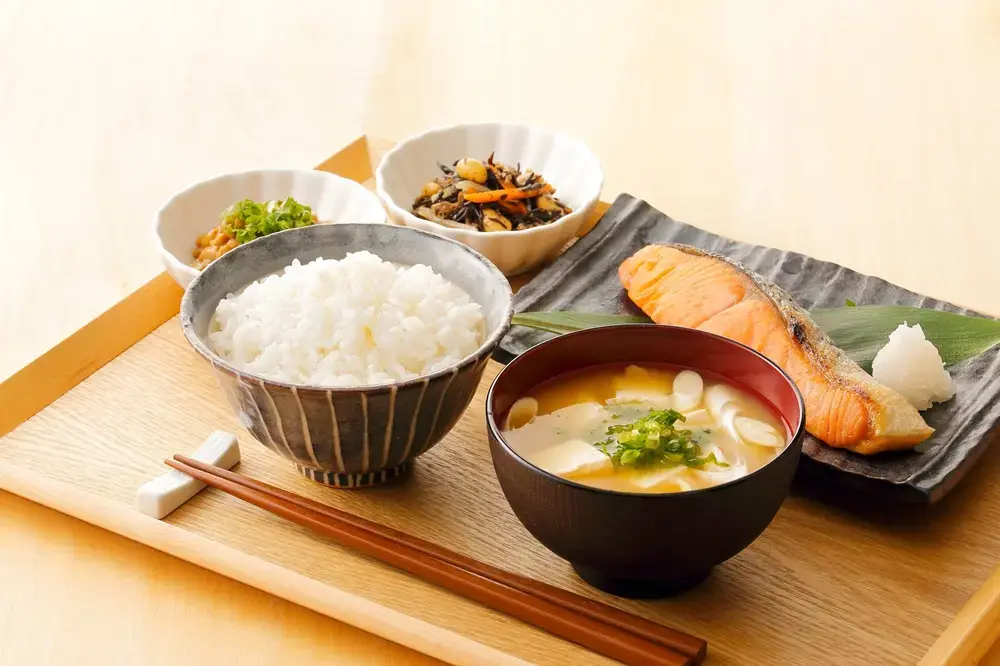
The traditional meal structure known as ichiju-sansai, meaning one soup and three side dishes, forms the foundation of Japanese tableware design. This arrangement requires multiple vessels, each with a defined role, including bowls for rice and soup, a plate for the main dish, and smaller dishes for side items.
Rather than repeating a single shape, this system encourages variation. Each vessel is sized and formed according to how the food is eaten, lifted, or shared, creating a balanced yet dynamic table setting.
Rice Bowls (Chawan): Designed for the Comfort of One Hand
Rice bowls are shaped to fit naturally in one hand, allowing the diner to lift the bowl and eat with ease. The gentle curve supports the thumb, while the bowl's height helps retain warmth without trapping excess heat. The ring-shaped base (koudai) at the bottom is slightly thicker and firmer than the rest of the bowl, providing stability and preventing heat from transferring directly to the hands.
They are most commonly used for steamed white rice and takikomi gohan, where aroma and temperature play an important role.
Lacquerware Bowls (Wan): The Essential Vessel for Hot Soups
Lacquerware soup bowls are made of wood, making them lightweight and easy to hold while retaining heat effectively. Some bowls also come with lids, allowing diners to enjoy the aroma when the lid is lifted. Their smooth interior allows liquids to flow cleanly, making them ideal for serving miso soup and osuimono, where clarity, temperature, and fragrance are important.
Rectangular Plates (Nagazara): Preserving the Beauty of Fish
Rectangular plates are designed to support the natural length and structure of fish. Their elongated shape allows both whole fish and fillets to be presented beautifully without falling apart, preserving appearance and flavor. They are often used for a wide range of grilled dishes, from seasonal whole fish to simple grilled fillets.
Deep Basins and Bowls (Hachi): Enhancing Simmered Dishes
Deep bowls and basins provide ample space for sauces and broths, allowing flavors to collect and intensify. Their depth also helps retain heat, ensuring that simmered dishes are served at the proper temperature.
These vessels are ideal for dishes such as nikujaga and chikuzenni, where balance between solid ingredients and liquid is essential.
Small Bowls (Kobachi & Mamezara): Preventing Flavor Mixing and Adding Rhythm
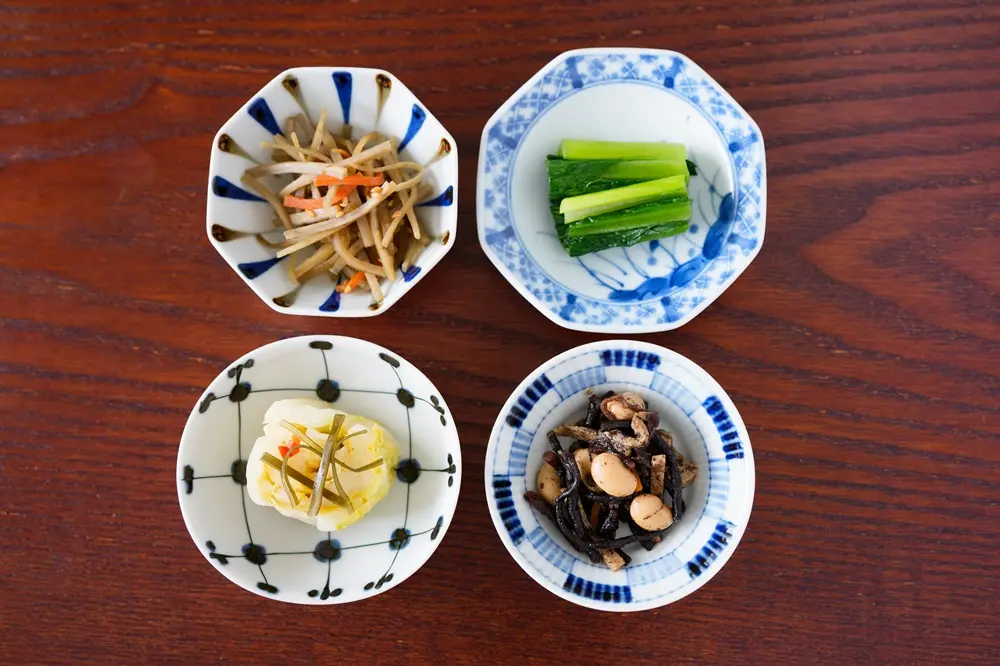
Small bowls and plates are used to separate strong or contrasting flavors. By keeping each item distinct, the diner can enjoy each taste individually.
At the same time, these smaller vessels introduce visual rhythm and pacing to the meal, guiding the flow from one bite to the next. They are commonly used for sunomono, pickles, and condiments.
The Seasonal Palette: Expressing Nature Through Motifs
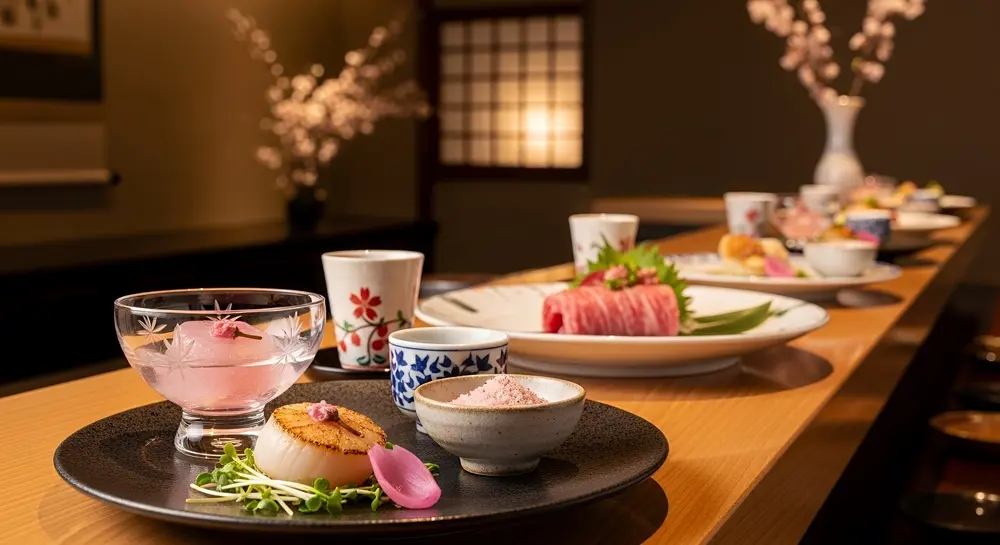
Japanese dishware reflects a deep awareness of the seasons, using motifs, colors, and materials to express changes in nature throughout the year. By rotating tableware seasonally, the dining table becomes a subtle expression of time, climate, and cultural rhythm.
Seasonal Motifs: Bringing the Four Seasons to the Table
Japanese dishware often reflects the natural world, with designs that shift throughout the year. In spring, small plates shaped like cherry blossoms celebrate renewal and impermanence. Summer dishware favors blue-and-white sometsuke patterns or flowing water motifs that evoke coolness.
Autumn introduces maple leaf designs and warm, earthy glazes that suggest comfort and maturity. In winter, heavier forms and deeper colors create a sense of warmth and stillness.
The Culture of "Changing Clothes":Why the Seasons Drive Diversity
The practice of changing dishware with the seasons is often described as "changing clothes for the table."This tradition encourages awareness of time and environment, reinforcing a connection between daily meals and the natural world.
As a result, Japanese dishware collections naturally grow diverse, with each piece serving a role at a particular moment in the year.
Systematized Variety: The Logic of Size and Smart Storage
Despite its visual diversity, Japanese dishware follows clear systems of proportion and efficiency. Measurement standards based on the human body ensure comfort in use, while stacking and nesting designs allow multiple forms to coexist practically within limited storage space.
The "Sun" System:Measurement Derived from the Human Body
The sun system is a traditional Japanese measurement framework based on the human body rather than abstract numerical standards. Historically known as shindoshaku, it was developed so everyday objects—from architecture to tools and tableware, would feel natural to hold, lift, and use.
At its core, the system is based on proportional relationships. One shaku is roughly the length of a human forearm, one sun represents a subdivision that aligns with the width of the palm or fingers, and one bu functions as a finer adjustment unit. One bu measures approximately 0.3 centimeters, one sun equals about 3 centimeters, and one shaku equals roughly 30 centimeters.
Applied to tableware, it ensures that bowls, plates, and trays fit comfortably in the hand, balance visually on the table, and relate harmoniously to one another. For example, a typical rice bowl (chawan) measures about 4 sun (approximately 12cm/40 bu) in diameter, it aligns with the span of the hand and the natural curve of the fingers, allowing the bowl to be held securely and comfortably during a meal.
Rather than enforcing uniformity, the system provides a flexible guide, allowing artisans to adjust shape, thickness, or material while maintaining proportions that feel intuitive, practical, and comfortable for daily use.
Space-Saving Design: The Functionality of Nesting and Stacking
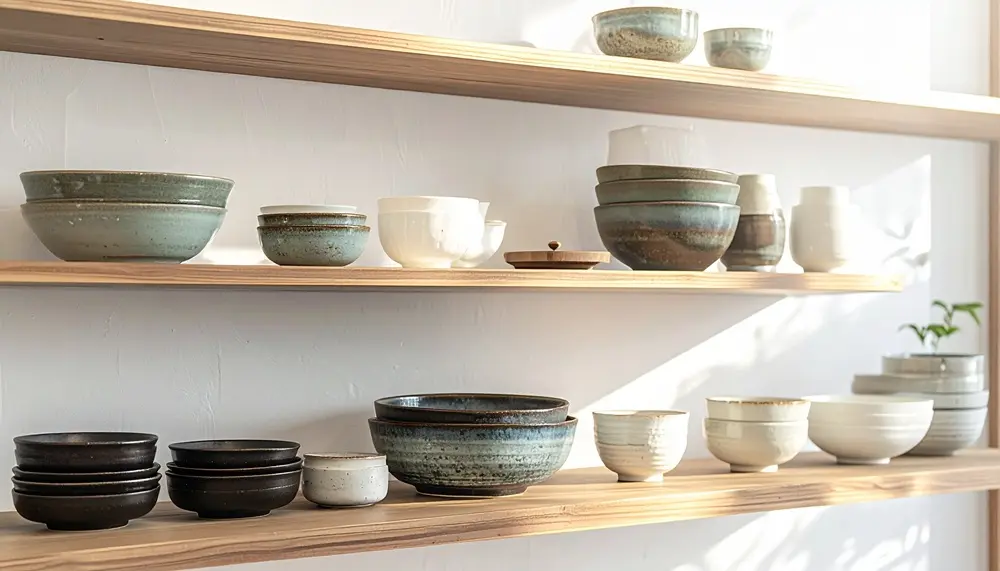
Japanese dishware is designed with storage efficiency in mind. Many bowls and plates are engineered to stack neatly or nest within one another in ireko formations. This approach maximizes space without compromising stability or design.
Such thoughtful construction supports both traditional homes and modern living environments, where compact storage is essential.
Quiet Logic, Lasting Beauty
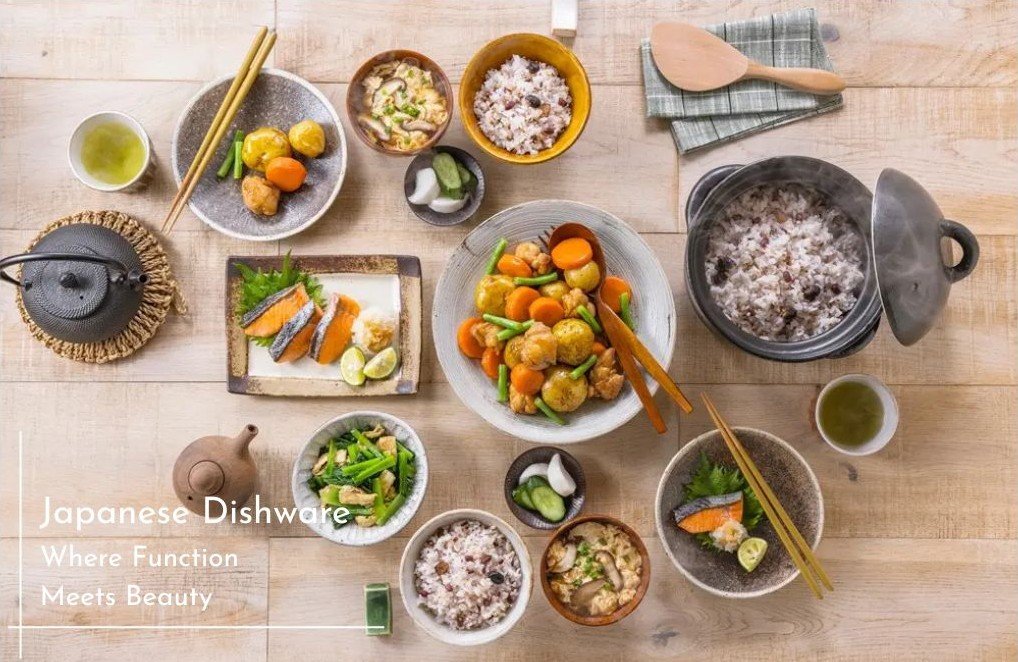
Japanese dishware represents a quiet system of logic refined over generations. Its diversity is not decorative excess, but a thoughtful response to food, season, and the human body. Through careful consideration of material, shape, and size, each vessel supports the act of eating with comfort and intention.
In this way, Japanese tableware transforms everyday meals into composed, meaningful experiences, where function and beauty exist in quiet balance.
*Some of the images featured in this article were created using generative AI.