

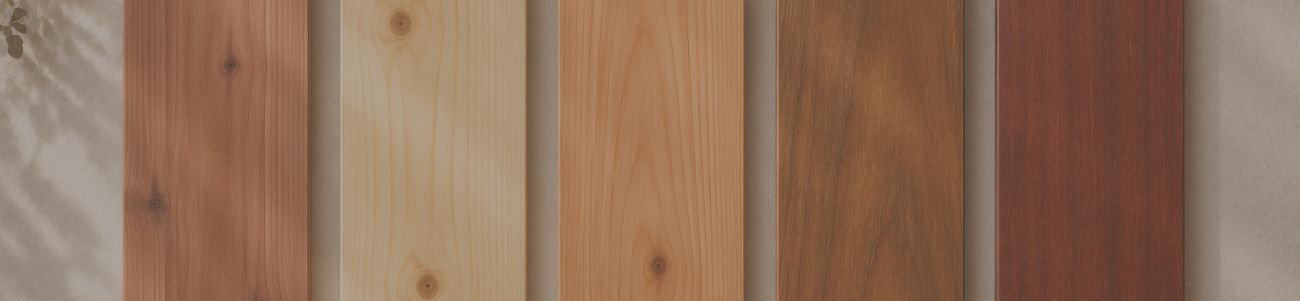
A Guide to Selecting and Styling Japandi Wood
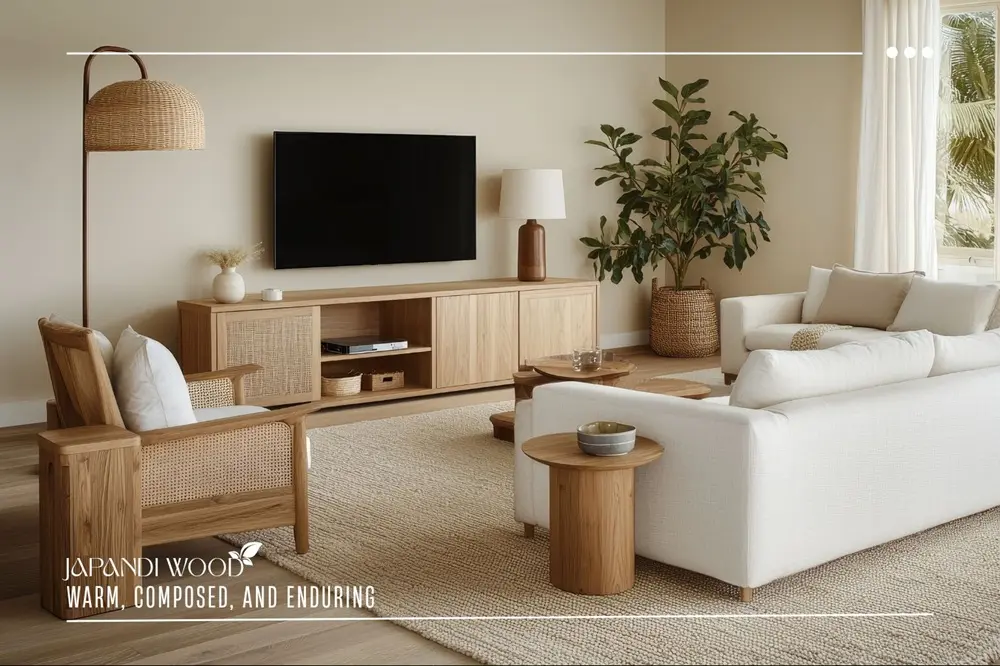
Japandi interiors are often recognized for their calm, balanced aesthetic—but achieving this sense of harmony goes beyond a neutral palette or minimalist forms. At its core, Japandi design is shaped by materials, with wood playing a defining role in how a space looks and feels. The choice of wood, its tone, and how it is paired with other elements all influence whether an interior feels cohesive or unresolved.
This guide explores how to approach wood with intention. From understanding its role within Japandi design to selecting suitable species and refining combinations, each section offers practical direction for creating interiors that feel warm, composed, and enduring.
Wood as the Foundation of Japandi Design
Minimalist spaces rely on clarity and restraint, but without the right materials, they can feel stark or impersonal. Wood introduces a necessary layer of warmth, softening clean lines and bringing a sense of quiet comfort into the space. It grounds the interior, allowing simplicity to feel lived-in rather than rigid.
Beyond its visual role, wood reflects the shared values of Japanese and Scandinavian design. It carries the softness and familiarity associated with everyday comfort, while also expressing an appreciation for natural textures and craftsmanship. Whether used in flooring, cabinetry, or furniture, wood establishes continuity—ensuring that each element feels connected within a calm and considered whole.
Material Balance: Pairing Wood with Complementary Elements
A well-resolved Japandi interior is defined not by a single material, but by the balance between them. Wood serves as the anchor, while other materials are introduced to support and refine the overall composition.
Textiles such as linen, cotton, and wool add softness and contrast. Their tactile qualities balance the solidity of wood, creating a space that feels both structured and inviting. Keeping to a muted palette—soft whites, warm greys, and natural earth tones, allows the grain and tone of the wood to remain the focal point.
Metal elements can be incorporated with restraint to introduce precision and subtle contrast. Finishes such as matte black or brushed steel define edges without drawing unnecessary attention. Wall surfaces should remain understated, with textured plaster or mineral finishes adding depth while maintaining visual calm. Together, these materials create a layered yet cohesive environment where no single element dominates.
Selecting the Right Wood: A Japandi Material Guide
Choosing the appropriate wood species is essential in shaping the atmosphere of a Japandi interior. While flexibility exists, certain woods align more naturally with the style's emphasis on lightness, subtlety, and organic warmth.
Woods That Naturally Suit Japandi Interiors
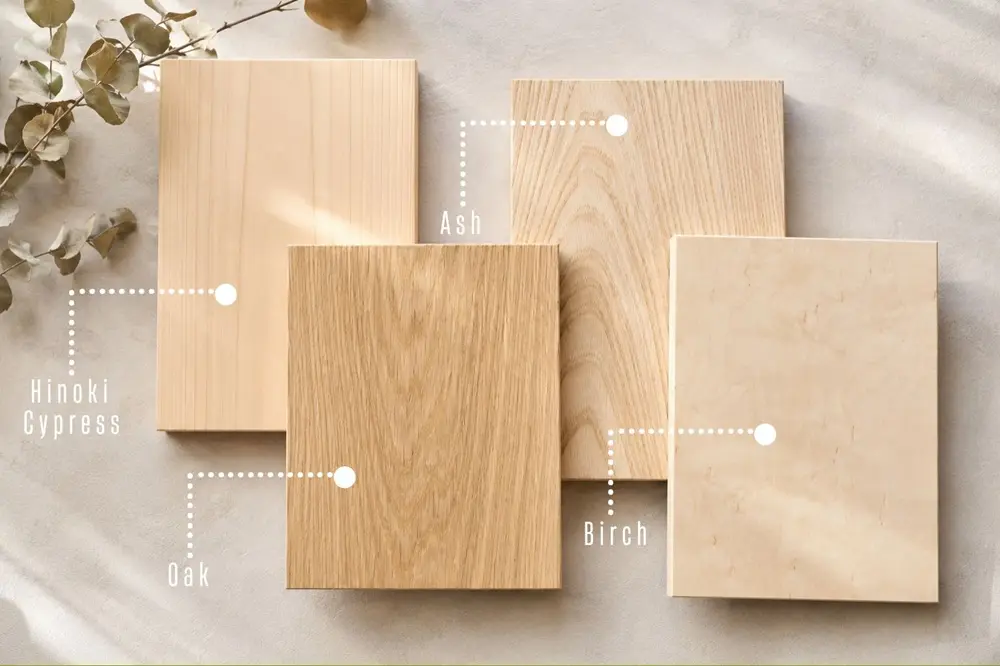
Hinoki Cypress (Japan)
Cypress is valued for its pale tone, fine grain, and understated elegance. Often associated with traditional Japanese spaces, it lends a sense of calm and refinement. Its light appearance makes it especially suitable for interiors that prioritise serenity and clarity.
Oak, Ash, Birch (Scandinavia)
These woods form the backbone of Scandinavian interiors. Oak offers durability with a gentle warmth, ash introduces subtle grain variation, and birch provides a clean, even tone. Each supports a bright and balanced environment, making them highly compatible with Japandi spaces.
Woods That Require Careful Application
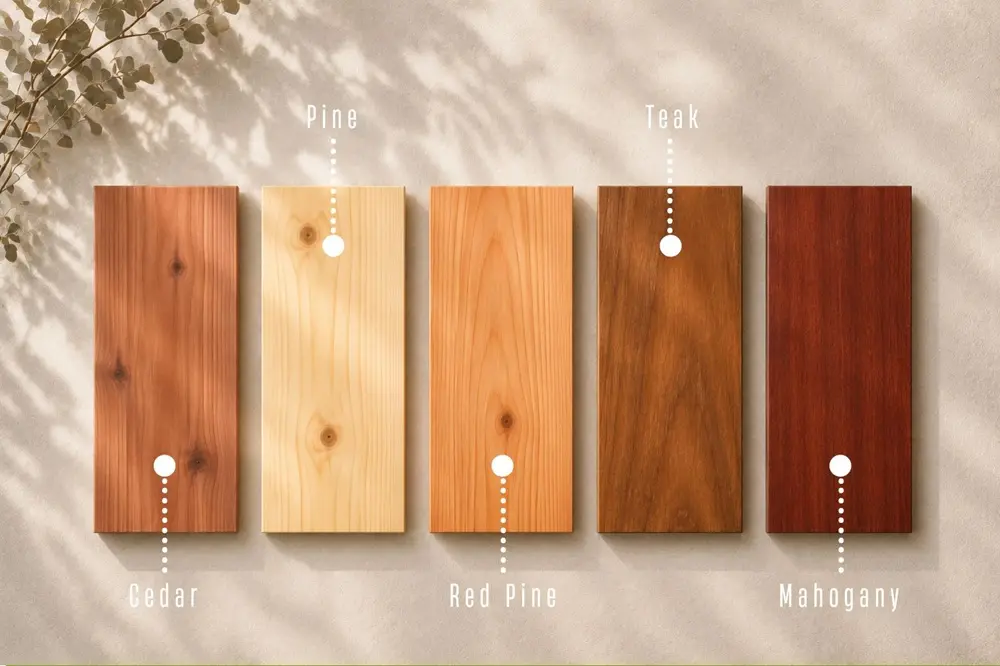
Cedar and Pine
Cedar and pine can be incorporated effectively when used with restraint. Their more pronounced grain and slightly rustic character benefit from lighter finishes and controlled placement. Limiting their use to selected furniture pieces or accents helps maintain a refined aesthetic.
Woods That Require Careful Application
Red Pine, Teak, Mahogany
Darker, reddish woods often carry a heavier and more traditional presence. While not unsuitable, they require careful balancing with neutral surroundings and minimal styling. Used sparingly, they can introduce depth, but excessive use may disrupt the calm and understated nature of Japandi interiors.
Tonal Pairings: Creating a Cohesive Japandi Palette
In most homes, wood appears across furniture, flooring, and architectural elements. Achieving cohesion requires a clear approach to tone and pairing. While using a single wood species creates consistency, thoughtful combinations can also work when guided by balance and restraint.
Light and Airy Composition
Atmosphere: This composition creates an open and breathable interior that feels calm, uncluttered, and quietly minimal. It is especially suitable for spaces where natural light is abundant, as it enhances the sense of softness and spatial clarity throughout the room.
Primary wood: Cypress or birch is used as the main material to establish a light visual foundation. These woods naturally reflect brightness and help maintain a sense of visual simplicity associated with Japandi interiors.
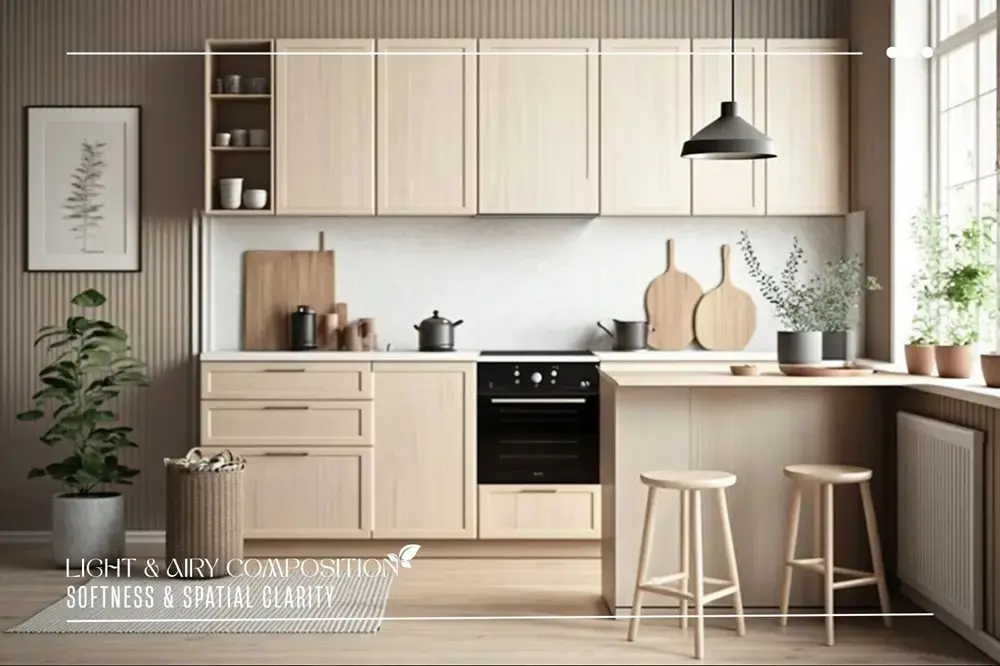
Kitchen Styling Example: In the kitchen, this composition is reinforced through a light wood palette that reflects natural light beautifully, enhancing the sense of openness and visual clarity throughout the space. Natural wooden kitchen tools introduce subtle everyday warmth, while potted plants provide a refreshing organic contrast that brings softness and vitality to the interior. A small textured rug can be used to gently anchor the floor area, while woven rattan baskets add natural tactility and understated functionality, further supporting the airy and balanced atmosphere characteristic of Japandi design.
Wood combinations (advanced styling): Cypress and birch can be combined with ease because their undertones, the subtle base hues beneath the surface color, are naturally aligned. When used together, they create a seamless transition between surfaces and furnishings, resulting in a consistent and unified visual flow throughout the space.
Warm and Balanced Interior
Atmosphere: This approach creates an inviting and softly layered interior that feels comfortable without becoming visually heavy. It strikes a balance between structure and warmth, making the space feel lived-in yet refined.
Primary wood: Oak or ash is often chosen for its versatile tone and fine grain, offering subtle depth while maintaining a clean, composed look. These timbers bring quiet character without overpowering the overall interior.
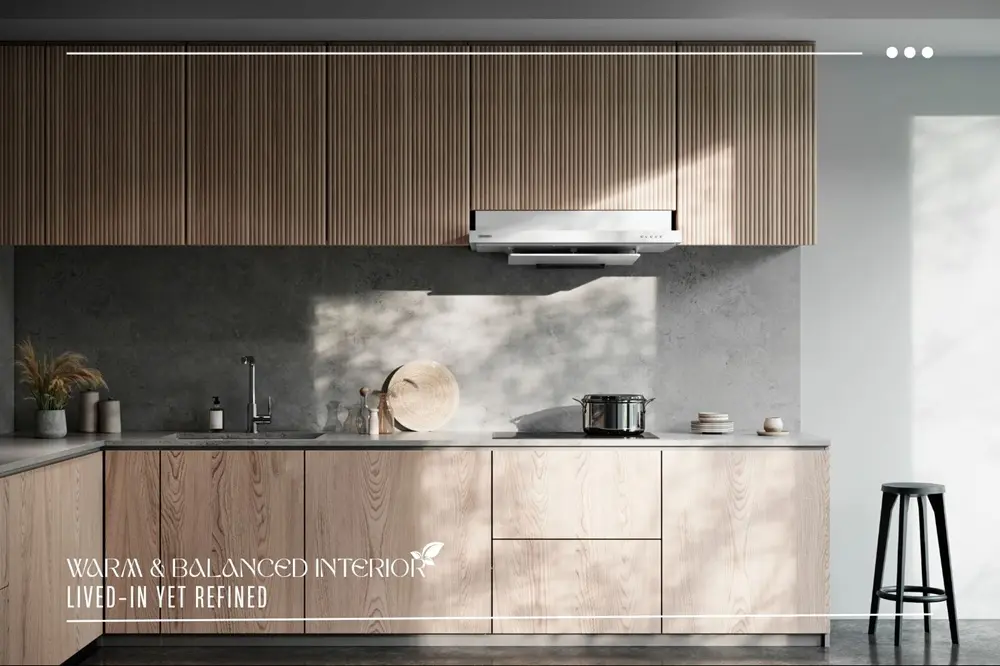
Kitchen Styling Example: A kitchen composition featuring upper and lower wooden cabinetry further enhances this palette, with slatted upper cabinets introducing subtle visual rhythm while smooth wood-grain lower units provide a clean and grounded contrast. Grey countertops add a cool neutral surface that balances the warmth of the timber, helping to create a layered yet cohesive expression. Together, these elements reinforce the warm and balanced atmosphere while maintaining the clean, contemporary sensibility associated with Japandi interiors.
Wood combinations (advanced styling): Oak and ash can be combined successfully when their undertones are carefully aligned. When used with restraint, the pairing creates subtle tonal variation while maintaining a consistent visual flow throughout the space.
Subtle Depth and Grounding
Atmosphere: This composition introduces a calm, grounded quality that adds subtle depth to the interior while preserving a light and natural Japandi sensibility. It is well suited for spaces that aim to feel warm and stable, yet still airy and visually restrained, allowing texture and tone to quietly enrich the environment.
Primary wood: Lightly finished cedar or pine serves as the dominant material, bringing a gentle sense of character and organic warmth. When treated with restraint, these woods maintain a soft visual presence, offering depth without overwhelming the overall composition.
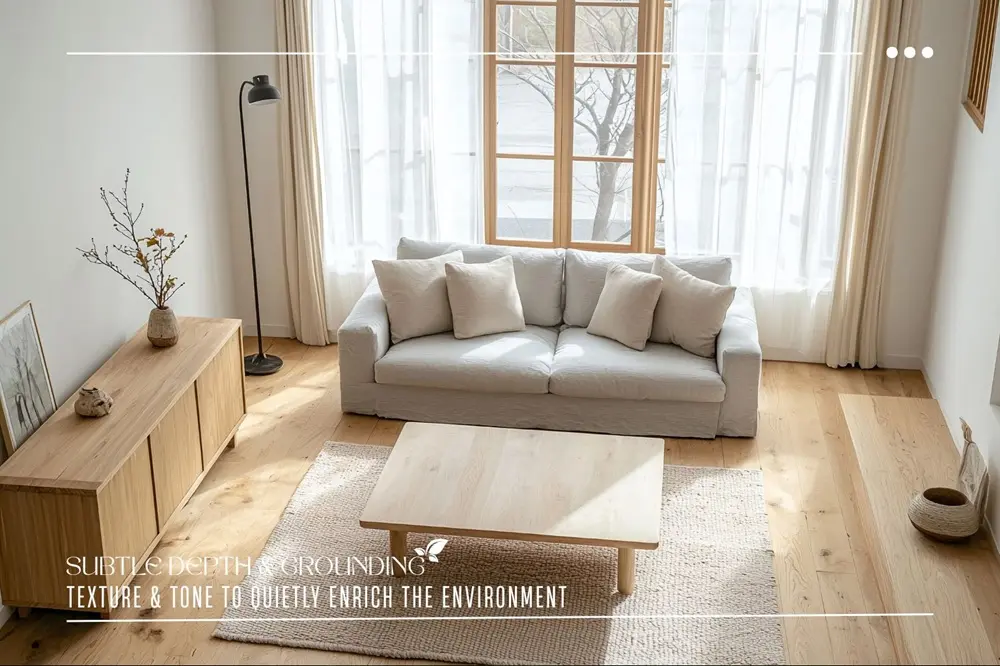
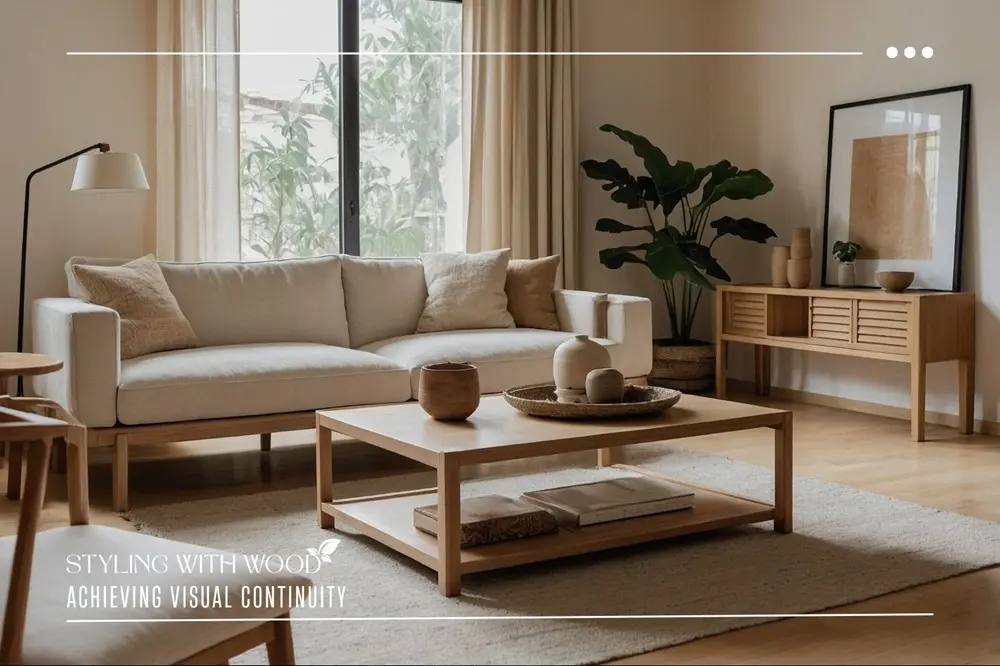
Living Room Styling Example: Warm neutral tones, off-white wall finishes, and softly textured fabrics help balance the natural depth of the wood, preventing the palette from feeling too dense. An off-white sofa introduces visual lightness and anchors the composition with clarity, while a slim floor lamp diffuses a soft, calming glow that enhances spatial softness. A natural wood coffee table reinforces material continuity, echoing warmth throughout the space without disrupting cohesion. A subtly textured rug grounds the arrangement, adding tactile comfort underfoot and gentle visual layering that completes the composition with understated balance.
Wood combinations (advanced styling): When cedar or pine is paired with lighter woods such as birch, the contrast creates a balanced interplay of tone and texture. This pairing helps prevent visual heaviness, ensuring the space remains open and breathable while still introducing subtle richness and variation across surfaces.
Controlled Contrast for Depth
Atmosphere: This style introduces a more defined contrast while still maintaining the calm discipline of Japandi design. It is minimal in approach, but intentionally layered to create visual depth and focus.
Primary wood: Teak or mahogany is used sparingly as the main wood element. These materials naturally carry deeper tones and are best applied in measured proportions to avoid overwhelming the space.
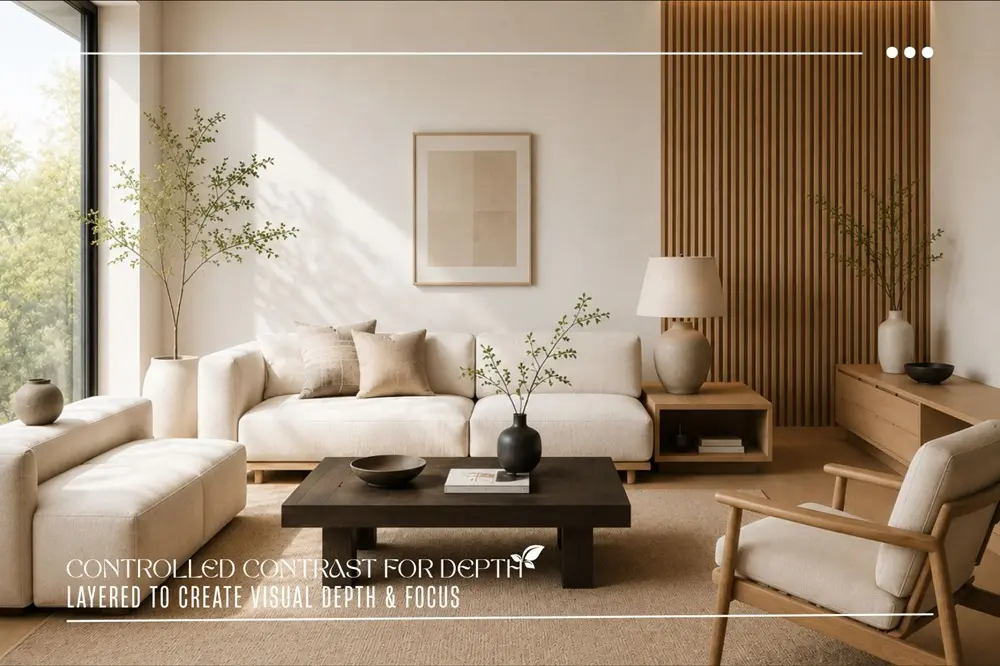
Living Room Styling Room Example: Crisp white walls, neutral textiles, and minimal decorative elements help maintain visual balance within the palette. A Japandi-style slatted wood wall can further ground the space, introducing subtle rhythm and architectural depth without overwhelming the composition. Within the seating area, a dark-toned coffee table acts as a focal anchor, reinforcing cohesion while allowing the surrounding lighter elements to retain a sense of openness and spatial clarity.
Wood combinations (advanced styling): Darker woods should always be balanced with larger areas of light-toned materials. This contrast helps preserve clarity, ensuring the overall composition remains open, structured, and visually calm.
Styling with Wood: Achieving Visual Continuity
Japandi wood styling is centred on balance, restraint, and visual consistency across surfaces. Instead of mixing many finishes, the goal is to limit variation and let repetition of tone and texture create calm. In practice, this means choosing a clear wood direction for each space, repeating it across key elements, and controlling contrast so the interior feels unified rather than fragmented.
Aligning Undertones for Cohesion
When combining different wood finishes, undertones play a more important role than surface colour alone. Woods with warm, yellow-based undertones should be grouped together, while cooler, gray-based woods should remain within the same tonal family. Limiting each space to one undertone direction helps the interior feel unified, even when multiple wood types are used across furniture and built-ins.
Defining the Spatial Mood Early
In Japandi design, wood should follow a clear tonal direction that sets the overall mood of the space, typically either light and airy, or calm and grounded. A light direction uses pale woods such as hinoki, birch, or light ash to reflect natural light and create an open, quiet atmosphere, while a grounded direction leans toward mid-toned woods such as oak or ash to introduce warmth and subtle depth for a more tranquil feel. Once this direction is chosen, all wood elements should remain within the same tonal family across flooring, furniture, and built-ins to maintain visual consistency.
Using Negative Space as a Design Element
Negative space is essential in Japandi interiors as it allows each material to be appreciated without visual competition. Neutral walls, simple rugs, and uncluttered surfaces act as buffers between wooden elements. These transitions allow each material to be appreciated while preventing the interior from feeling heavy.
Ensuring Material Harmony
Maintaining balance is key. Excessive use of wood across every surface can create a heavy, enclosed atmosphere that feels closer to a cabin aesthetic. Similarly, strong reddish tones or glossy finishes may disrupt the natural palette, while mixing too many wood types without a clear strategy can lead to visual inconsistency, so a controlled and intentional approach is key.
Designing for Longevity: The Beauty of Aging Wood
Wood is valued not only for its immediate appearance, but for how it evolves over time. High-quality materials develop a natural patina, with subtle changes in tone and texture that enrich the space.
For example, oak gradually takes on a warmer, slightly amber hue that enhances its sense of comfort and groundedness, while cypress ages more slowly and tends to retain its light, airy brightness for a longer period, making it ideal for spaces that aim to preserve a fresh visual feel. This gentle evolution is part of its appeal, reflecting a design approach that embraces change rather than resisting it.
Proper care such as gentle cleaning, periodic maintenance, and protection from excessive moisture or direct sunlight, helps preserve the material's integrity, allowing these changes to develop evenly and gracefully over time.
Bringing It All Together: Designing with Intention
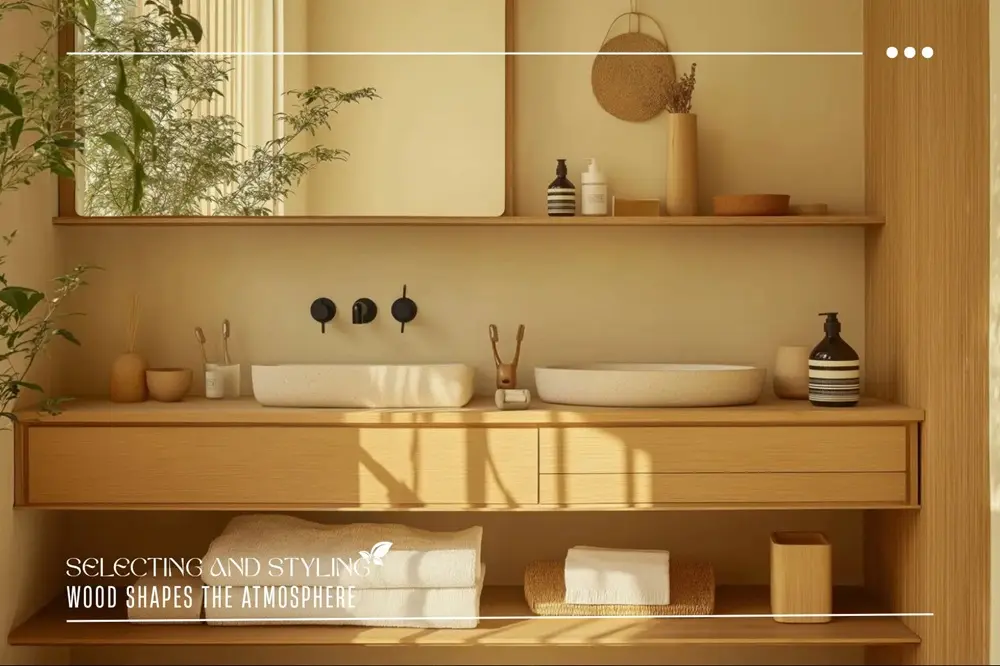
Selecting and styling wood within a Japandi interior is an exercise in balance and intention. Each choice, from species and tone to placement and pairing, shapes the overall atmosphere of the home.
By focusing on harmony, material quality, and thoughtful restraint, wood becomes more than a design feature. It forms the foundation of a space that feels calm, cohesive, and enduring, where simplicity is enriched by warmth and quiet depth.
*Some of the images featured in this article were created using generative AI.