

Pure Warmth: The Japandi Washi Design Guide

In Japandi interiors, warmth is created through carefully chosen materials that bring comfort, texture, and a connection to nature. While wood often takes center stage in Japandi design, another traditional Japanese material quietly contributes to the style's calming atmosphere: Washi paper.
Known for its delicate appearance and remarkable durability, Washi has been used in Japanese homes for centuries. From shoji screens and lanterns to decorative arts and architectural details, its soft texture and ability to gently filter light have long made it a valued element of interior design.
Today, Washi continues to find relevance in modern homes, particularly within Japandi spaces. Its natural fibers, subtle textures, and organic character help soften minimalist interiors, creating environments that feel warm, welcoming, and lived in. This guide explores how Washi complements Japandi design and practical ways to bring its timeless beauty into the modern home.
How Washi Complements Japandi Design
Japandi design combines the functionality and minimalism of Scandinavian interiors with the craftsmanship and natural beauty found in Japanese living spaces. At the heart of this aesthetic is a shared appreciation for natural materials, thoughtful craftsmanship, and understated beauty—qualities that make Washi a natural complement to Japandi spaces.
Rather than serving as a purely decorative element, Washi introduces texture, depth, and softness in subtle ways. Its organic character balances the crisp forms often found in minimalist interiors, creating spaces that feel warm, calm, and inviting without adding visual clutter. Whether incorporated into lighting, architectural features, furnishings, or decorative accents, Washi enhances the tranquil atmosphere that defines Japandi living.
What is Washi? Easy Basics of Japanese Paper
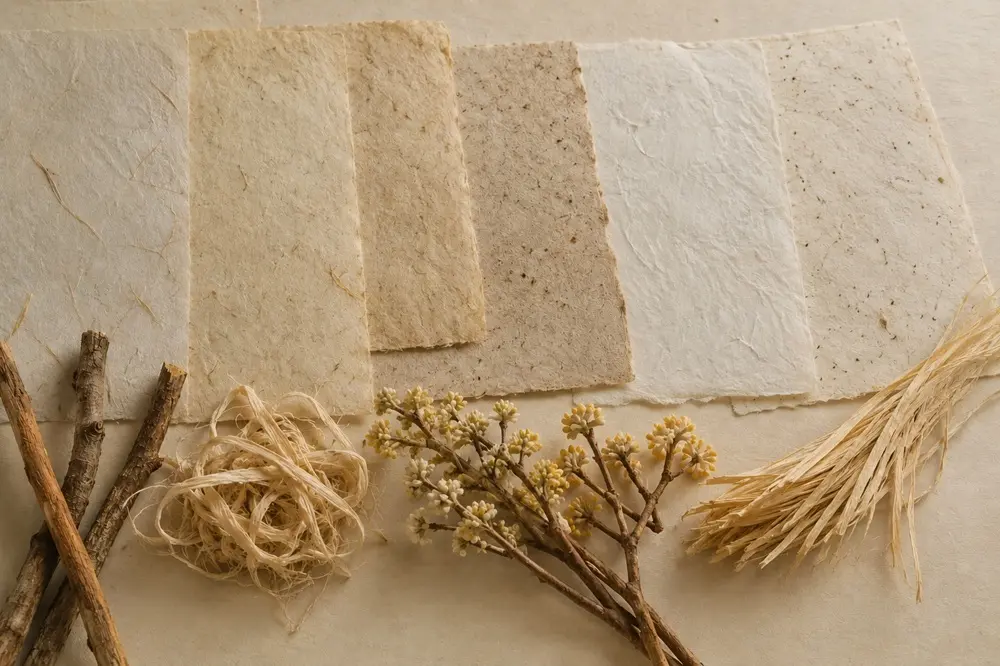
Washi, often referred to as traditional Japanese paper, is made from natural plant fibers such as kozo (paper mulberry), mitsumata (a flowering shrub used for papermaking), and gampi (a native Japanese plant used to make strong, smooth paper). Rather than referring to a single type of paper, Washi encompasses a diverse range of handmade papers produced using different fibers, papermaking techniques, and regional traditions throughout Japan.
Each fiber lends distinct characteristics—kozo is valued for its strength and visible fibers, mitsumata for its smooth surface and subtle sheen, and gampi for its silky texture and natural translucency. This diversity allows Washi to be produced in a wide range of textures, thicknesses, colors, and patterns, making it suitable for applications ranging from shoji screens and lighting to wallpaper, artwork, and decorative accessories.
With a history spanning more than a thousand years, Washi remains prized for its beauty, craftsmanship, and versatility. Depending on the fibers and manufacturing method, it can be lightweight yet relatively durable, while its textured surface gently diffuses light to create a soft ambiance and adds warmth without overwhelming a space. Washi also pairs naturally with materials such as wood, stone, linen, clay, and ceramics, making it an ideal complement to Japandi interiors.
Unlike highly processed materials with perfectly uniform surfaces, Washi retains the subtle irregularities of natural plant fibers and traditional papermaking. These variations reflect the Japanese aesthetic of wabi-sabi—finding beauty in imperfection, authenticity, and the passage of time. The result is a material with quiet depth and character that brings warmth, understated elegance, and a sense of craftsmanship to contemporary Japandi spaces.
How Washi Changes the Mood of a Room
Modern interiors often feature smooth surfaces such as glass, metal, concrete, and painted walls. While visually striking, these materials can sometimes make spaces feel cold or overly structured.
Washi introduces balance by softening these harder elements. Its textured surface catches light differently throughout the day, adding depth and visual interest without overwhelming the room.
When paired with minimalist furniture, Washi helps reduce the starkness of sharp edges and geometric forms while adding warmth to concrete, stone, or plaster surfaces. Its natural texture creates a calmer visual environment and encourages a slower, more relaxed atmosphere.
The visible fibers and handcrafted quality of Washi also introduce a subtle human touch, helping spaces feel more personal and comfortable.
7 Ways to Incorporate Washi Paper into a Japandi-Style Home
Washi can be incorporated into a home in both large architectural features and smaller decorative details. These applications allow homeowners to enjoy its unique texture while preserving the clean simplicity of Japandi interiors.
1. Washi Lighting: Casting a Warm, Diffused Glow
Lighting is one of the easiest and most effective ways to introduce Washi into a Japandi interior.
Ideal Locations
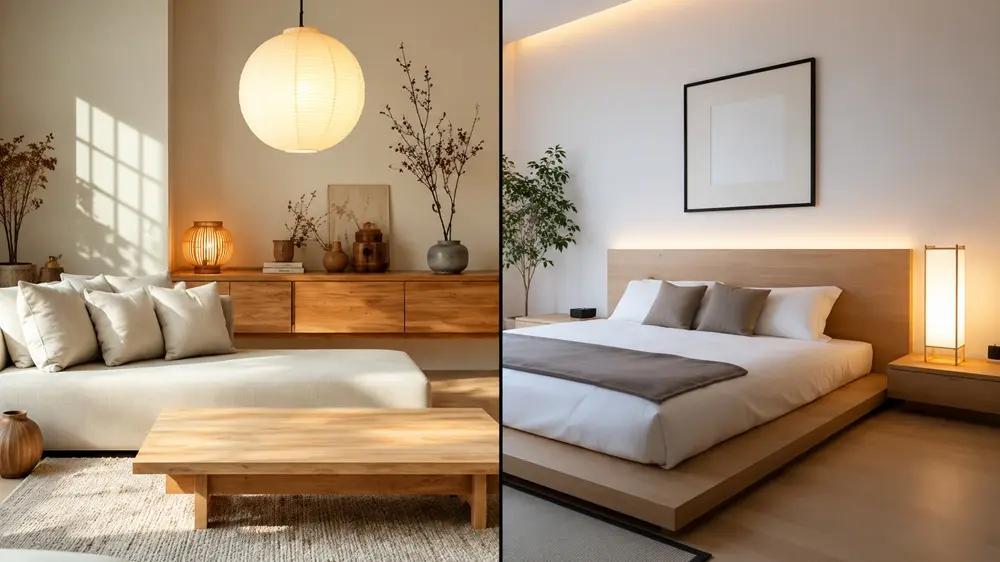
Washi lighting works particularly well in entryways, hallways, living room corners, and on bedside tables. These areas benefit from the soft, welcoming illumination that Washi provides, helping to create a calm and inviting atmosphere throughout the home.
Recommended Lighting Options
Popular Washi lighting choices include spherical pendant lamps, traditional Japanese lanterns, slim floor lamps, and table lamps with Washi shades. Each option showcases the material's ability to soften light while adding subtle texture and visual interest to the space.
Spatial Impact
Washi gently diffuses light, reducing harsh glare and creating a soft ambient glow. This transforms functional lighting into a comforting design feature, adds warmth to minimalist interiors, and provides a subtle focal point without overwhelming the room.
2. Shoji Screens: Flexible and Light Room Dividers
Shoji screens have been a defining element of Japanese interiors for centuries and remain highly relevant in contemporary homes.
Ideal Locations
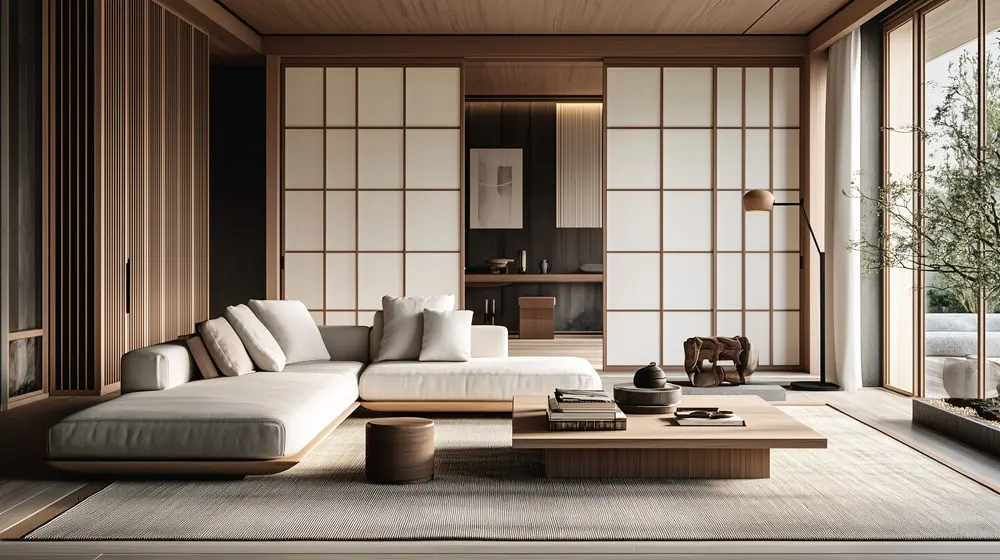
Originally, shoji screens were used in traditional Japanese homes to separate interior rooms from verandas or windows facing the outdoors, allowing natural light to filter gently into the space. Today, their ability to softly define boundaries while maintaining a sense of openness makes them equally well suited for separating living and dining areas. They are also ideal for home offices, studio apartments, and other multi-functional spaces where flexible zoning and light-filled interiors are desired.
Traditional Shoji Options
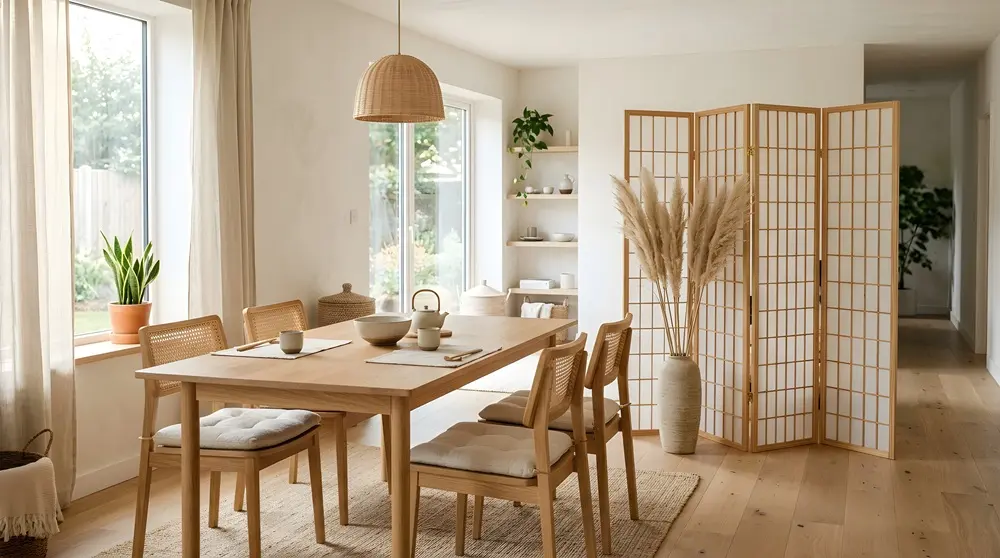
Traditional sliding wooden lattice doors can be used to divide spaces while allowing light to pass through. Fixed shoji panels provide a permanent architectural feature that adds texture and softness to a room. Folding screens offer a portable and versatile solution for creating privacy when needed.
One of the practical advantages of traditional shoji screens is their ease of maintenance. If the Washi paper becomes torn or worn over time, it can be replaced by hand using readily available shoji paper, allowing the screen to be refreshed without replacing the entire frame.
Spatial Impact
Shoji screens provide privacy and spatial separation without completely blocking light. They allow daylight to flow throughout the home while maintaining an open and airy feeling.
3. Washi Screens & Blinds: Minimalist Window Treatments
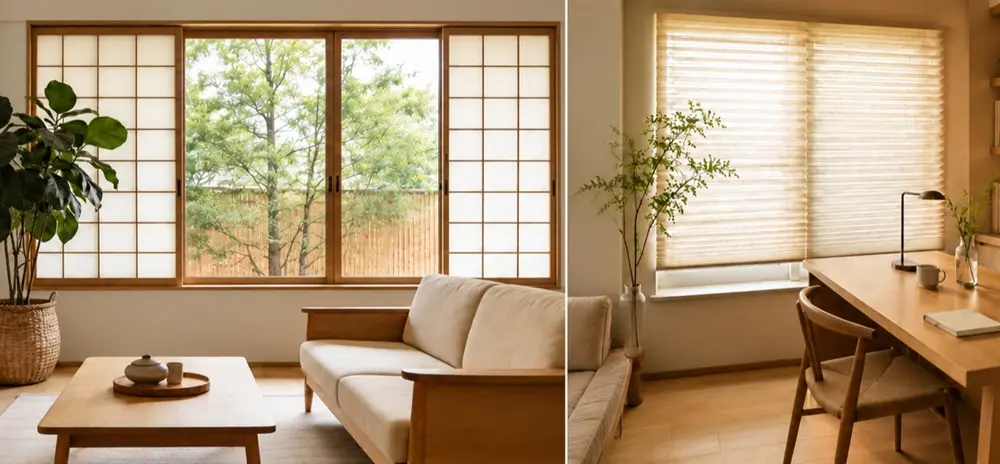
For homeowners seeking an alternative to heavy curtains, Washi-based window treatments offer a clean and elegant solution.
Ideal Locations
Washi screens and blinds work particularly well on living room windows, where they can soften incoming daylight while maintaining an open and airy atmosphere. They are also suitable for study rooms, helping to reduce glare and create a comfortable environment for reading or working. In bedrooms, they provide privacy while allowing gentle natural light to filter into the space.
Washi Screens and Blinds Options
Washi window treatments are available in several styles, including roll-up blinds, vertical panel shades, pleated window screens, and honeycomb-structured Washi blinds. Each option offers a clean, minimalist appearance that complements Japandi interiors while enhancing the quality of natural light throughout the room.
Spatial Impact
These window coverings soften incoming daylight while preserving privacy. Honeycomb designs can also help improve insulation, reducing the impact of outdoor temperatures and supporting heating and cooling efficiency.
4. Washi Wallpaper: Adding Depth to Plain Walls
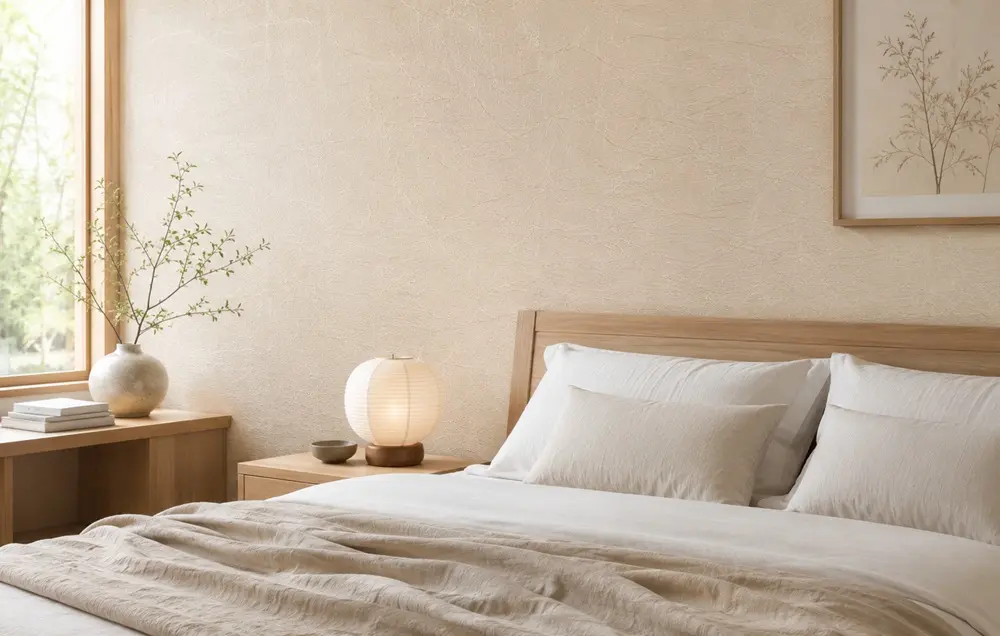
Washi wallpaper offers a refined alternative to conventional painted surfaces.
Ideal Locations
Washi wallpaper is well suited to both feature walls and full-room applications. While it creates a calming focal point behind a bed or in an entryway, its subtle texture and soft appearance also make it ideal for covering entire rooms without feeling overwhelming. This allows bedrooms, reading corners, and other relaxation spaces to feel warm, serene, and cohesive. Smaller spaces such as alcoves and niches can also benefit from Washi wallpaper, as the added texture brings depth and character without overwhelming the area.
Washi Wallpaper Options
There are several types of Washi wallpaper available to suit different interior styles. Seamless fibrous wallpaper highlights the natural beauty of Washi's plant fibers, while textured wall coverings add visual depth and tactile interest.
Another option is Washi backing paper—traditionally a paper used to reinforce, shape, and improve the longevity of wallcoverings and other interior finishes. Certain high-quality Washi backing papers are also valued as a visible finishing material in their own right, appreciated for their understated texture and natural appearance.
Spatial Impact
The subtle texture introduces depth and dimension while remaining visually quiet. As natural light shifts throughout the day, delicate shadows appear across the surface, bringing walls to life.
5. Washi Ceilings & Furniture: Creating a Cozy Cocoon Effect
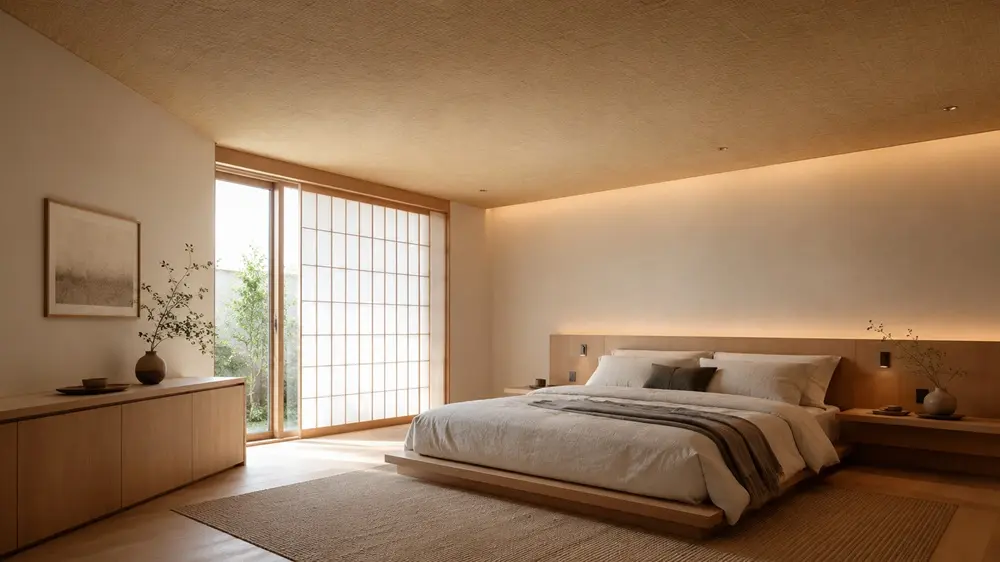
Although less common, Washi can also be incorporated overhead to create a uniquely comforting atmosphere.
Ideal Locations
Washi ceilings work particularly well in bedrooms, where they help create a calm and restful atmosphere. They are also an excellent choice for reading nooks and relaxation areas, as the soft texture contributes to a sense of comfort and tranquility. In spaces with lower ceilings, Washi can help reduce visual heaviness and make the room feel more inviting.
Ceiling & Furniture Applications
Common applications include inset ceiling panels that introduce subtle texture overhead and recessed wood-framed paper ceilings that blend traditional craftsmanship with modern design. Washi can also be incorporated into furniture through cabinet doors covered with Washi paper or sideboard panels accented with Washi, making it easy to introduce the material into smaller areas of the home.
Spatial Impact
Washi softens the visual weight of ceilings while helping diffuse light more evenly. It can also reduce the perception of echo in certain spaces, contributing to a quieter and more intimate environment.
For homeowners seeking a simpler introduction, applying Washi to cabinet doors or sideboards offers a smaller-scale way to enjoy the material's character.
6. Washi Wall Art: Framed Minimalist Texture
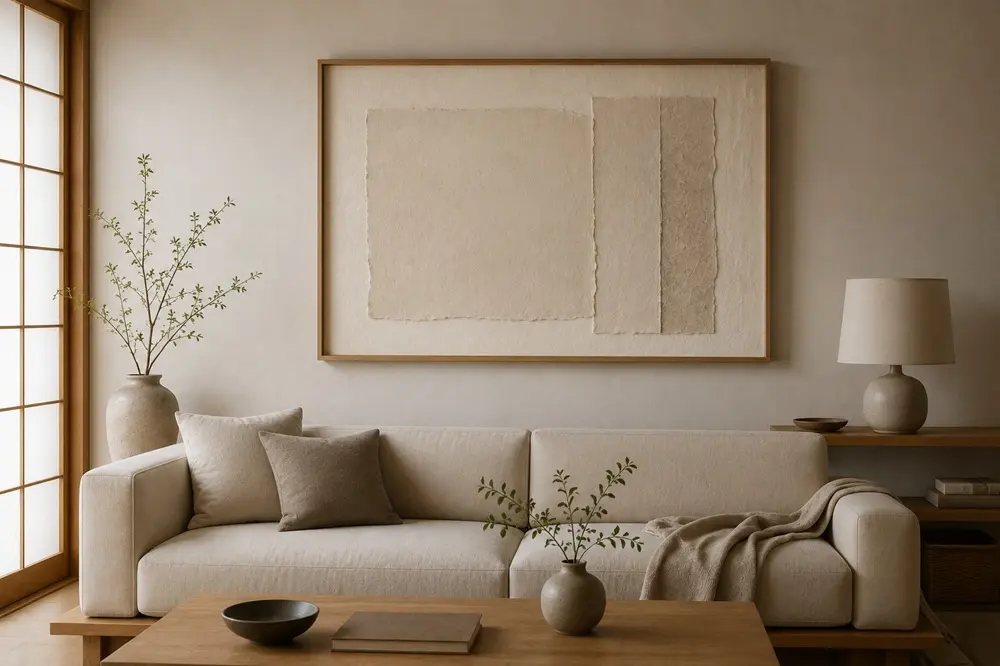
Washi itself can become artwork, offering a subtle yet impactful way to introduce texture, craftsmanship, and visual interest into a Japandi interior.
Ideal Locations
Washi wall art works particularly well above living room sofas, along dining area walls, in hallways, and throughout transitional spaces where a subtle visual focal point is desired.
Washi Art Ideas for Minimalist Interiors
Consider displaying torn-edge Washi sheets that highlight the paper's natural texture and handcrafted character.
Monochrome prints on Washi paper offer a refined and understated artistic element that complements neutral interiors.
Layered paper collages can add depth and visual interest while maintaining a minimalist aesthetic.
Textured art panels provide an easy way to incorporate Washi into a space and create a sophisticated focal point.
Spatial Impact
Washi wall art creates visual interest without overwhelming the room. Its natural texture blends effortlessly with neutral color palettes, making it particularly well suited to Japandi interiors.
7. Small Washi Accessories: Subtle Everyday Tactility
Not every Washi element needs to be architectural. Smaller accessories can introduce texture in a more understated way.
Ideal Locations
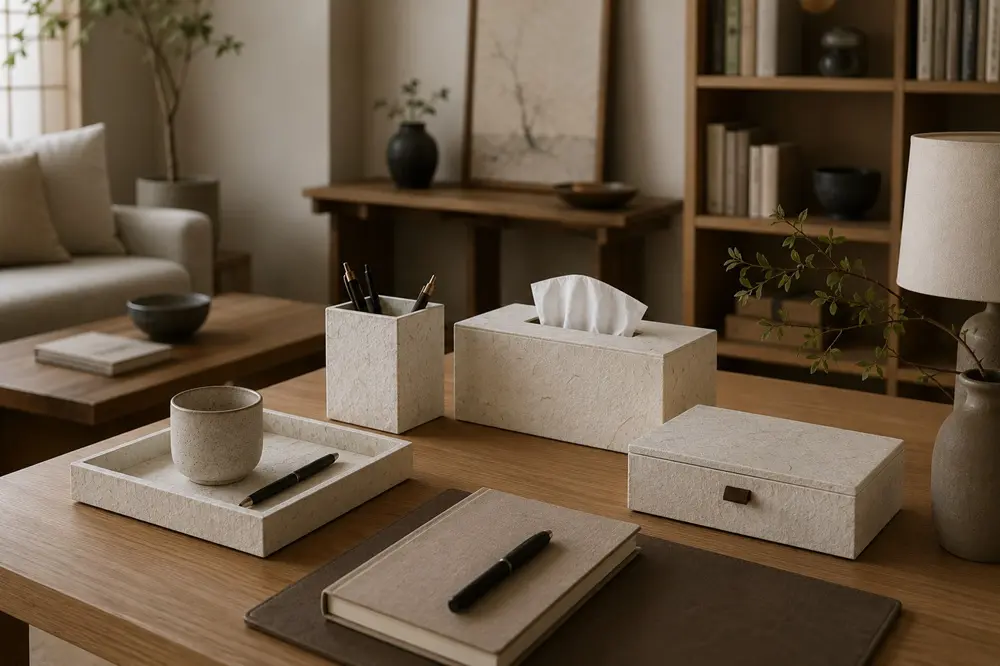
Washi accessories work particularly well on coffee tables, display shelves, entryway consoles, and home office desks, where their subtle texture can be appreciated in everyday use.
Washi Storage and Desk Accessories
Examples include storage boxes, serving trays, desk organizers, and tissue box covers. These practical items introduce the warmth and character of Washi while helping to keep surfaces organized and clutter-free.
Spatial Impact
These pieces add tactile contrast alongside smooth wood, metal, and ceramic surfaces. The result is a layered and inviting space that remains visually uncluttered.
The Practical Benefits of Washi: Coziness and Sustainability
Beyond aesthetics, Washi also aligns with modern preferences for sustainable, long-lasting materials that contribute to healthier living environments.
Appreciating Washi's Natural Texture and Graceful Aging
Many contemporary materials are designed to resist change, but Washi offers a different experience.
Over time, its color and texture may gradually evolve, developing a richer and more mature character. These subtle changes reflect the passage of time and add individuality to the home.
For many homeowners, part of Washi's appeal lies in observing these natural transformations. Each piece ages differently depending on its environment and exposure to light, allowing owners to appreciate its unique journey over the years.
Washi also provides a meaningful alternative to synthetic decorative materials. Its authentic texture creates a sense of connection to nature that mass-produced plastic surfaces often cannot replicate.
Eco-Conscious Comfort: Safe and Clean Materials
As homeowners become increasingly conscious of environmental impact, Washi offers several sustainability benefits. Produced from renewable plant fibers, it is a naturally derived material that supports a more environmentally responsible approach to interior design while bringing the comfort and authenticity of nature into everyday living spaces.
Benefits include that Washi is made from renewable plant sources, making it a more sustainable material choice. It is biodegradable and environmentally friendly, helping to reduce long-term environmental impact. Its production relies less on synthetic materials, allowing homeowners to incorporate more natural elements into their interiors. Washi is also naturally breathable, which can contribute to a more comfortable indoor environment. Additionally, its plant-based composition makes it suitable for creating healthier living spaces with fewer artificial materials.
Its plant-based composition also aligns with the Japandi emphasis on surrounding ourselves with natural materials that support comfort and wellbeing.
Bringing Timeless Warmth into Japandi Living
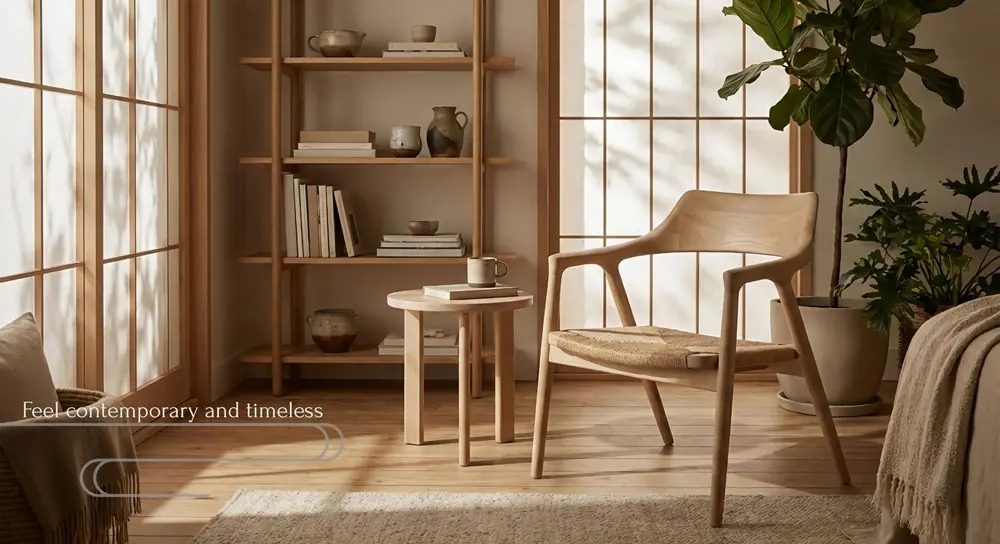
Washi paper demonstrates how a simple material can have a profound impact on the atmosphere of a home. Through its natural texture, soft light diffusion, and understated beauty, it introduces warmth without compromising the clean simplicity that defines Japandi design.
Whether used in lighting, shoji screens, wallpaper, accessories, or artwork, Washi helps create calm, inviting spaces that feel connected to nature. Its natural aging process adds unique character over time.
When combined with the natural woods, muted palettes, and functional layouts typical of Japandi interiors, Washi helps create spaces that feel both contemporary and timeless, proving that the harmony between Japanese craftsmanship and Scandinavian warmth continues to inspire modern living.
*Some of the images featured in this article were created using generative AI.