

Japandi Side Tables: A Guide to Design, Materials, and Styling
- What Is a Japandi Side Table? A Guide to Choosing and Styling One
- The Key Features of Japandi Side Table Design
- How to Choose the Right Japandi Side Table
- Japandi Side Table Ideas for Different Rooms
- Japandi Side Table Styling Ideas
- Japandi Side Table Combinations: Styling Examples for a Cohesive Interior
- Creating a Timeless Japandi Interior with the Right Side Table
- Finding Beauty in Simplicity
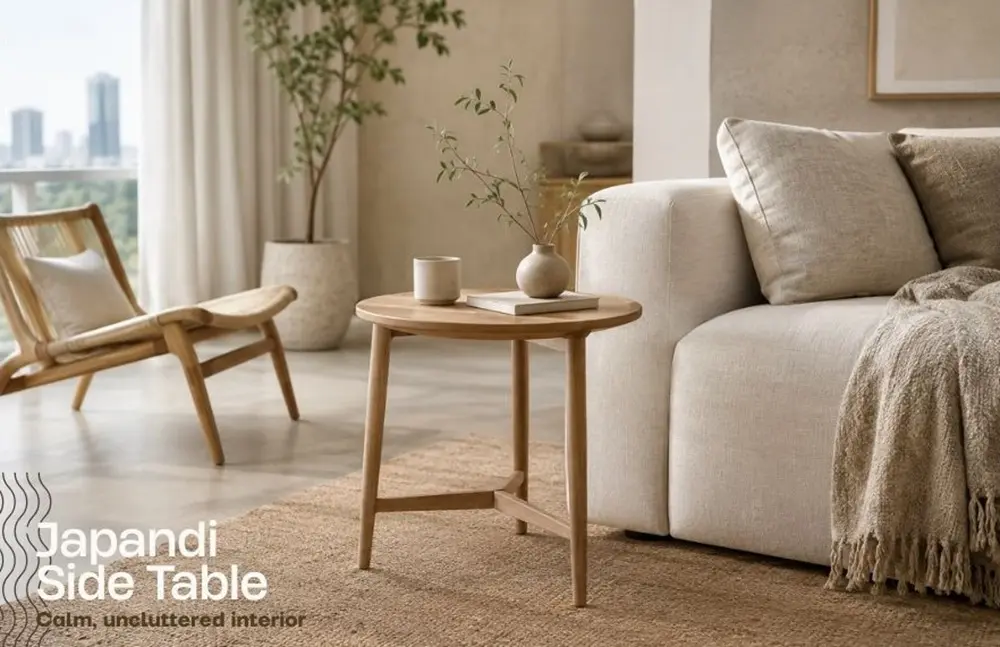
A side table may be one of the smallest pieces of furniture in a room, but it can make a noticeable difference to both comfort and composition. Positioned beside a sofa, lounge chair or bed, it provides a convenient surface for everyday essentials while helping to complete the overall look of a space.
In a Japandi interior, the side table is particularly well suited to the philosophy of combining simplicity with function. Designs often feature natural materials, understated forms and balanced proportions, creating a piece that feels useful without demanding attention. From a low wooden table beside a floor-level seat to a compact table with wheels that can be moved around the living room, there are many ways to incorporate this versatile furniture piece.
Rather than following one fixed design, a Japandi side table can take different forms depending on its purpose, surrounding furniture and available space. Understanding these variations can make it easier to choose a piece that feels natural within a calm, uncluttered interior.
What Is a Japandi Side Table? A Guide to Choosing and Styling One
A side table is a small table designed to sit beside or near another piece of furniture, such as a sofa, armchair or bed. Its main purpose is to provide an accessible surface for items such as books, drinks, lamps or personal belongings.
A Japandi side table applies this practical concept through design principles commonly associated with Japandi interiors: simplicity, functionality, natural materials and visual balance. Instead of relying on elaborate decoration, the furniture itself provides interest through its material, shape and craftsmanship.
Japanese simplicity, which celebrates the beauty of natural materials and the considered use of negative space, is complemented by the warmth of Scandinavian design through soft curves, tactile textures and practical details. Together, these influences create furniture that feels understated, functional and welcoming.
Key Characteristics of a Japandi Side Table
Japandi side tables can take many different forms, but several characteristics help define their characteristic look and feel.
Considered proportions create a relaxed appearance without compromising usability. A low table can complement a low sofa or floor-level seating, while a taller design may work better beside a conventional armchair.
Natural materials such as wood, bamboo, rattan and stone can bring warmth and texture into a minimalist room. Natural variations in grain and texture bring subtle character while keeping the overall look understated.
Clean silhouettes keep the overall composition visually calm. Round, oval, square and rectangular designs can all suit a Japandi setting when their proportions work with the surrounding furniture.
Purposeful details can improve practicality. A lower shelf, drawer, open compartment or casters can be useful when they respond to how the table will actually be used.
Why Side Tables Work Well in Japandi Interiors
Side tables provide useful surface space without requiring a large footprint. A small table beside a sofa can hold a drink and book, while a slightly larger design can accommodate a table lamp, decorative object or storage basket.
Their versatility also makes them suitable for different seating arrangements. Some designs are fixed in place, while others can be moved, nested or repositioned as needed. This flexibility is particularly useful in homes where rooms serve multiple purposes.
As side tables are relatively small, they can also introduce a new material or shape without changing the character of an entire room. A wooden surface can add warmth to a neutral setting, while stone or woven details can provide contrast and texture.
The Key Features of Japandi Side Table Design
A well-designed Japandi side table brings together several elements that support both its appearance and everyday use. Proportion, texture, construction and function all contribute to a piece that feels harmonious within a calm interior.
Low and Balanced Proportions
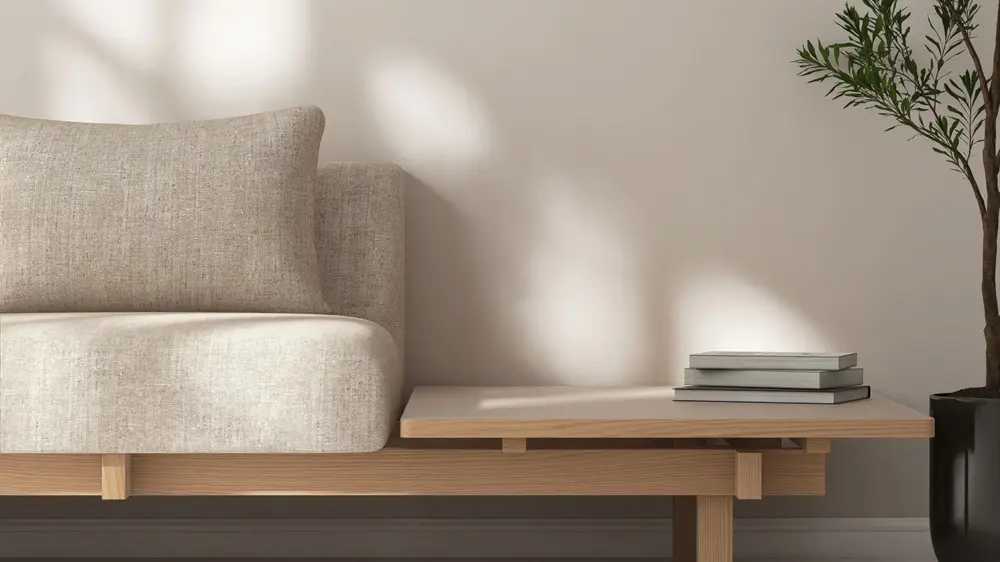
Low-profile furniture can create a relaxed and grounded atmosphere, making it especially appropriate for living rooms with low sofas, lounge chairs or floor-level seating.
A low side table can also preserve sightlines across the room, helping the space feel open rather than visually divided. However, the height should be determined by practical use as much as appearance. A table that sits too far below the sofa or chair may be difficult to reach and less useful in everyday life.
A table beside a conventional sofa may need to sit closer to the seat height, or around the same height as the sofa's armrests if it has them. One placed beside a floor cushion, meanwhile, can be considerably lower.
Natural Materials and Warm Textures
Natural materials help introduce warmth and tactile variation into otherwise restrained interiors.
Wood is one of the most versatile choices. Light and medium-toned woods can create a warm, understated appearance, while darker timber can provide greater contrast against pale walls or upholstery.
Bamboo and rattan offer a lighter, more tactile quality, while stone can introduce visual weight and contrast. These materials do not need to be used uniformly throughout the room. Combining a few related textures can create depth while keeping the interior cohesive.
Natural imperfections can also contribute to the character of the piece. Subtle grain patterns, knots and variations in finish can make a simple table feel more distinctive without relying on ornamental details.
Simple Shapes with Soft, Organic Details
Simple geometry provides a strong foundation for Japandi furniture. Round and oval tables can soften the visual lines of a room, while square and rectangular designs can provide a more structured appearance.
Softly curved edges and gently shaped legs and simple constructions can add warmth without making the design feel elaborate. Slim legs, open bases and other visually lightweight structures can further enhance this sense of lightness, allowing more of the surrounding floor and rug to remain visible. This can be particularly useful in smaller rooms, where solid furniture may make the space feel more enclosed.
An organic silhouette can also create visual interest when the rest of the furniture has a more restrained form. The surrounding room should guide the choice. A distinctive shape can become a subtle focal point, while a simpler design may be more appropriate when other furniture or decorative elements already provide visual interest.
How to Choose the Right Japandi Side Table
A suitable side table should support the way a room is used while fitting naturally into its existing composition. Material, shape, dimensions and placement all play a role in finding the right piece.
Choosing the Right Material: Wood, Stone, and Natural Textures
The material of a side table can influence how it interacts with the rest of the room.
Wood is a versatile choice. Lighter woods such as oak can create a softer, lighter impression, while darker woods such as walnut bring a calm and tranquil atmosphere. Stone has a more substantial presence and can add texture and visual weight when paired with warmer materials.
Bamboo and rattan can introduce a lighter, more tactile element, particularly in rooms with plenty of natural light. Rather than matching the table precisely to existing furniture, consider how its material relates to other surfaces in the room.
A mix of related finishes can often feel more natural than using the same material throughout.
Choosing the Best Shape for Your Space
The shape of a side table can influence both the visual character of a room and how easily people move around it.
Round and oval tables have softer edges and can work well beside angular sofas or reading chairs. They can also be useful where circulation space is limited. Square and rectangular tables provide a more defined footprint and can make efficient use of narrow areas beside sofas or beds.
When choosing between them, consider the surrounding furniture, available floor area and how much tabletop space is actually required.
Finding the Right Height and Size
The table should be easy to reach from the furniture it serves. A significant difference in height can make everyday items awkward to access and may also make the table appear disconnected from the seating.
Consider the intended use when deciding on the tabletop size. A table for a book and drink can remain compact, while one intended for a lamp or additional storage may require a larger surface.
In smaller homes, multifunctional designs can make better use of limited floor area. Shelves, drawers, nesting features or casters can add flexibility without requiring another piece of furniture.
Matching the Side Table with Existing Furniture
A side table does not need to match every other item in the room. Instead, look for connections in tone, material, shape, scale and overall visual weight.
For example, a wooden table can echo timber flooring or cabinetry without using the same finish. A rounded tabletop can relate to curved seating or lighting while introducing a slightly different form.
The base design should also complement the surrounding furniture. Slender legs can help maintain a light and open appearance, particularly when paired with compact or visually lightweight furniture. A heavier pedestal or solid base may work better alongside substantial seating or other pieces with greater visual weight.
This approach creates cohesion without making the room appear overly coordinated.
Japandi Side Table Ideas for Different Rooms
A side table's compact footprint allows it to serve different purposes throughout the home, from providing a surface beside a sofa to creating a practical bedside arrangement.
A Japandi Side Table for the Living Room
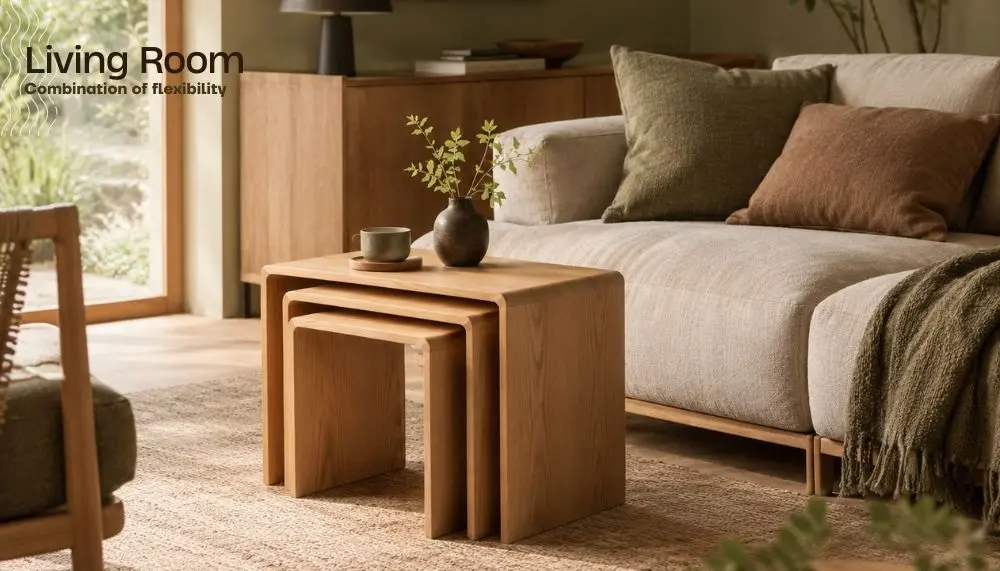
In the living room, a side table can sit beside a sofa or lounge chair, providing space for books, drinks, a table lamp or other everyday essentials.
A design with casters can be useful in a flexible living area. It can be moved closer to a sofa, repositioned beside an armchair or cleared away when more floor space is required.
Nesting tables offer a flexible option for living rooms that occasionally need extra surfaces for guests. Smaller tables can be pulled out when needed and tucked away afterwards, while the nesting design allows them to be stacked together for compact storage. This combination of flexibility and understated design makes them particularly well suited to clean, uncluttered Japandi interiors, where practical use of space is an important consideration.
A Japandi Side Table for the Bedroom
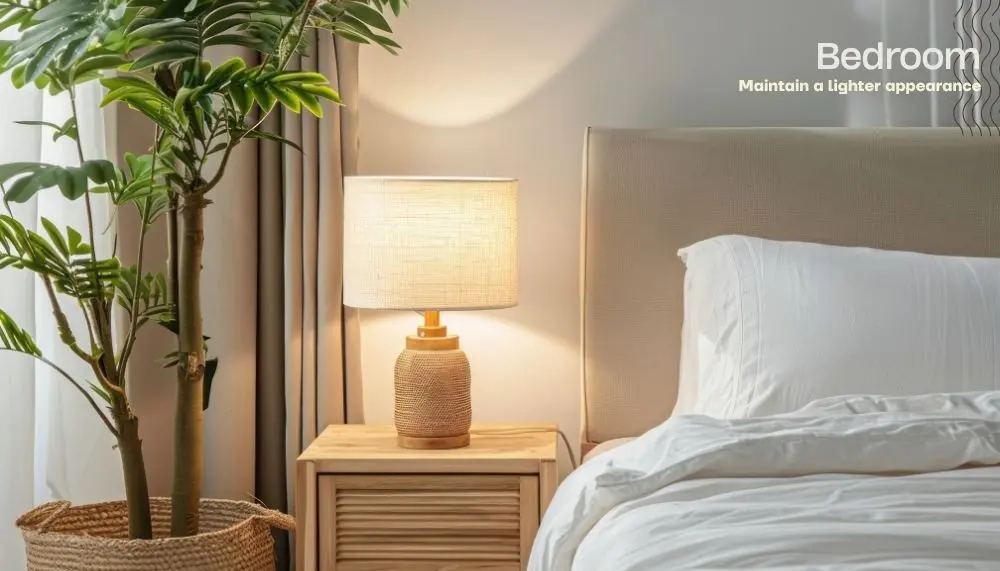
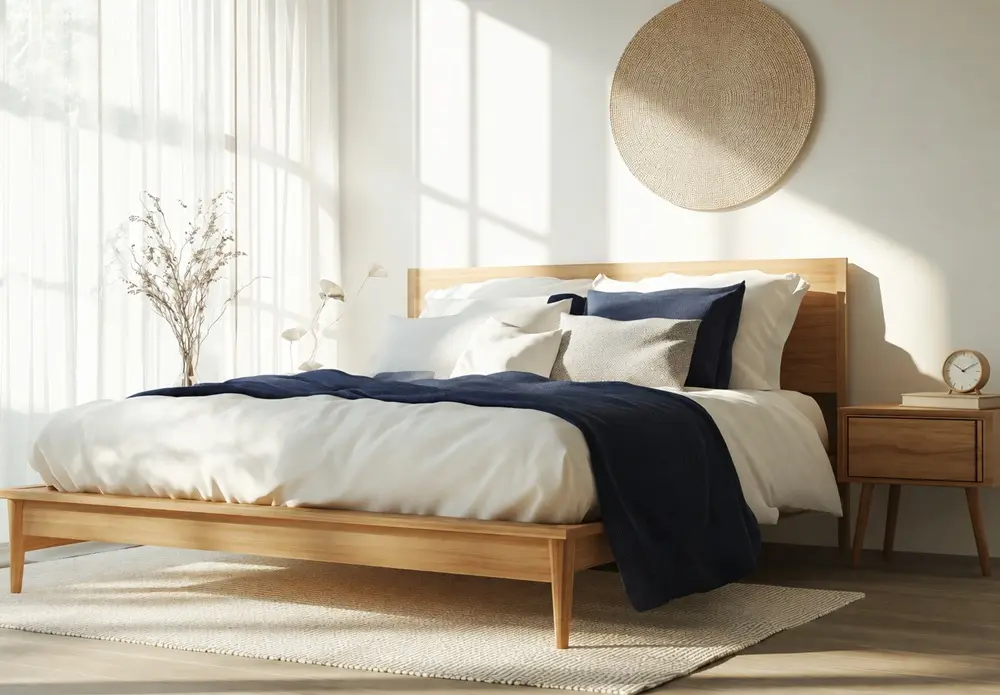
A compact side table can function as a minimalist bedside table, providing space for a lamp, book, phone or other essentials.
Open designs can help maintain a lighter appearance in smaller bedrooms, while drawers or enclosed compartments offer a discreet place for personal belongings. The dimensions should remain proportionate to the bed while allowing comfortable movement around it.
A Japandi Side Table for a Reading Corner
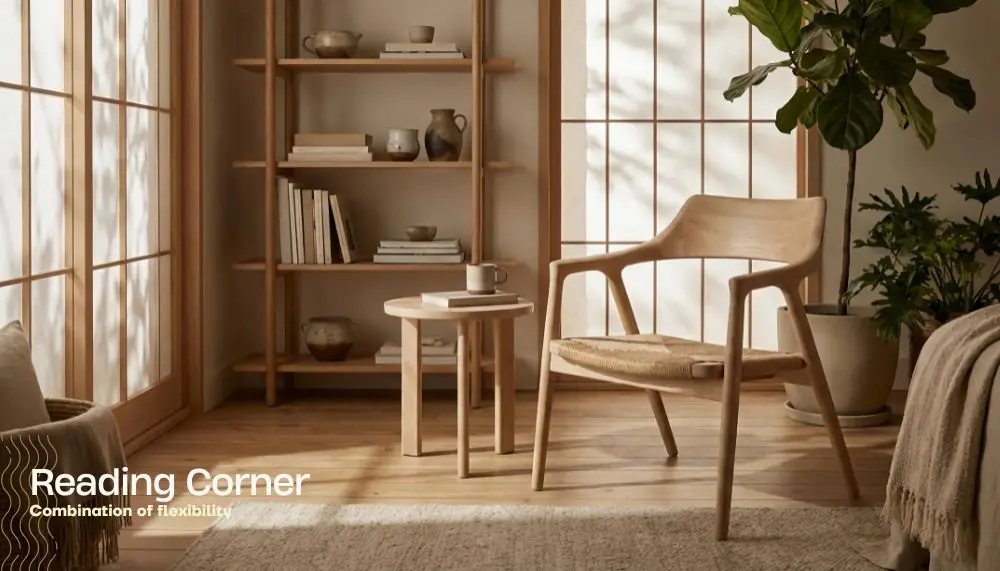
A small side table can make an accent chair or floor cushion more practical by providing a nearby surface for books, drinks or a small lamp.
A round wooden table beside a softly upholstered chair can create a simple reading corner, while a more compact design can fit beside floor seating without overwhelming the arrangement.
A Japandi Side Table for Small Spaces
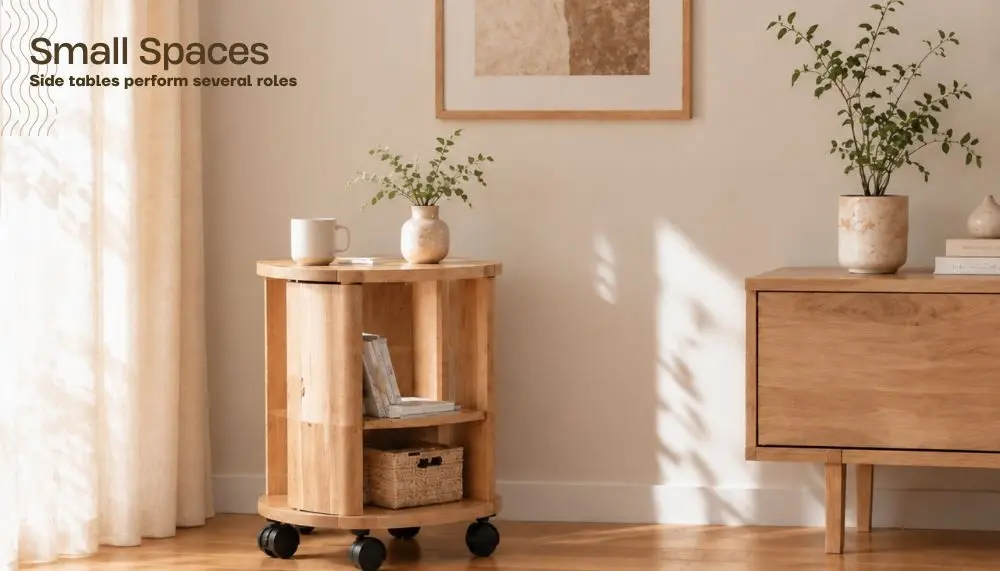
In compact apartments, a side table can perform several roles. A small design with storage may work as a bedside table, occasional table or additional surface in a living area.
Lightweight designs are particularly useful where layouts change frequently. Casters, nesting configurations and compact storage can provide greater flexibility while keeping the footprint small.
In these spaces, choosing a table with a clear purpose is especially important. A restrained design can provide useful functionality without making the room feel crowded.
Japandi Side Table Styling Ideas
Styling a side table is less about filling the surface and more about creating an arrangement that remains useful and visually calm.
Keep the Surface Simple and Functional
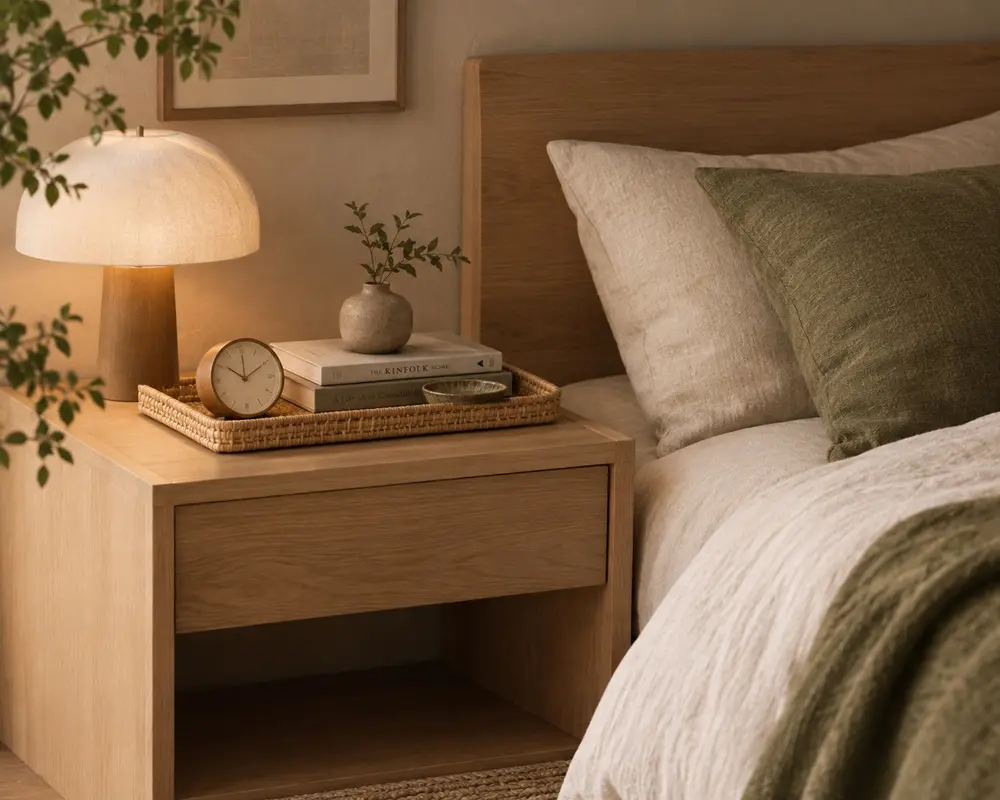
Start with the items that are genuinely useful. A book, drink, small lamp, ceramic vase or tray can provide enough visual interest without covering the entire tabletop.
Leaving part of the surface available for everyday use also prevents the arrangement from becoming overly decorative.
Add Texture with Natural Decor
Small decorative elements can introduce texture without adding visual clutter.
Handcrafted ceramics, woven accessories, small wooden objects, natural branches and subtle greenery can create variation while maintaining a restrained palette.
Where possible, relate these details to materials already present in the room. A ceramic object can echo a nearby vase, for example, while a wooden accessory can reinforce the warmth of timber furniture.
Create Balance Through Height and Scale
Varying the height of a few objects can create a more considered arrangement. A small vase placed beside a horizontally positioned book, for example, introduces contrast without requiring numerous decorative pieces.
Scale matters just as much. An oversized object can dominate a small tabletop, while too many small pieces may make the arrangement feel scattered.
Let Empty Space Be Part of the Design
Empty space is an important part of a calm Japandi interior. A tabletop does not need to be completely filled to look finished.
Leaving part of the surface clear makes it easier to use the table and allows the form and material of the furniture itself to remain part of the composition. This restrained approach reinforces the idea that beauty can come from simplicity and purposeful design.
Japandi Side Table Combinations: Styling Examples for a Cohesive Interior
A side table works best when it complements the surrounding furniture and decor.
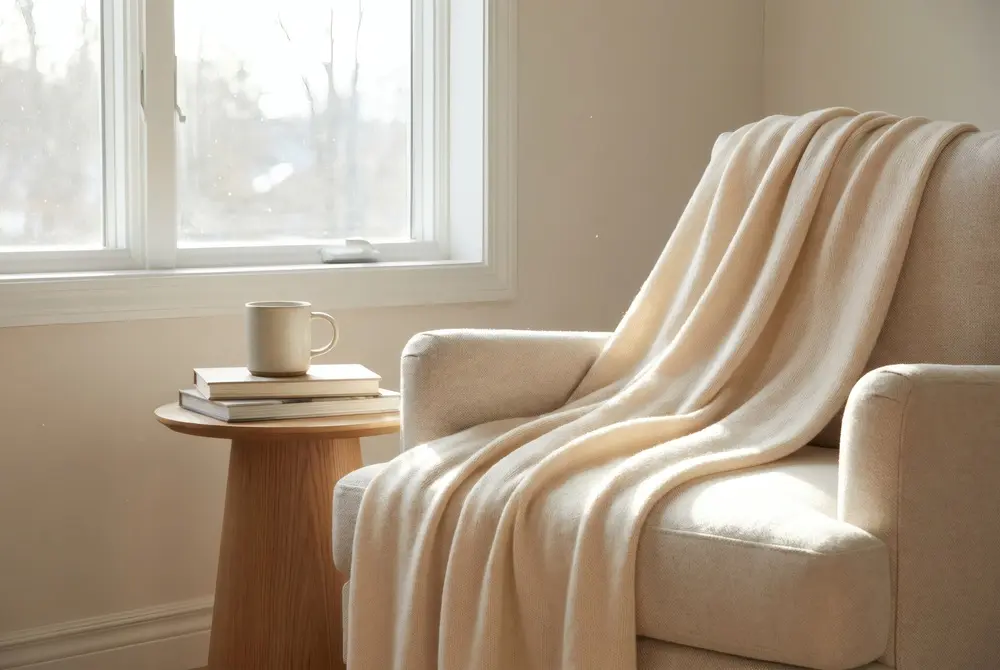
Light Wood Side Table with Neutral-Colored Seating
A light or medium-toned wooden side table can pair naturally with beige, grey, off-white and other muted upholstery.
The combination creates warmth without relying on strong colors. Similar natural tones can be repeated through flooring, cabinetry or decorative objects, while subtle differences between the materials keep the room from feeling overly coordinated.
A Rounded Side Table with Organic Shapes and Textures
A rounded side table can soften a space with predominantly straight lines.
Pair it with a curved lounge chair, sculptural lighting or rounded ceramics to create a sense of visual continuity. Textured textiles, woven accents and natural finishes can further enhance the organic feel while keeping the overall arrangement simple and understated.
A Minimal Side Table in a Layered Japandi Space
A simple side table can provide a subtle foundation in a layered Japandi interior.
Rugs, cushions, lighting, artwork and natural materials can add depth, while the understated table helps keep the overall arrangement balanced and uncluttered.
Creating a Timeless Japandi Interior with the Right Side Table
The right side table can contribute to a Japandi interior in ways that extend beyond its size. Its material can introduce warmth, its proportions can influence the sense of space, and its practical features can make everyday routines more convenient.
Rather than choosing the most distinctive piece, consider how naturally the table works with the furniture already in place. A simple form, suitable dimensions and practical features can give it lasting relevance as the room evolves.
The right choice should provide what the space needs while allowing the surrounding furniture and open areas to remain visually balanced.
Finding Beauty in Simplicity
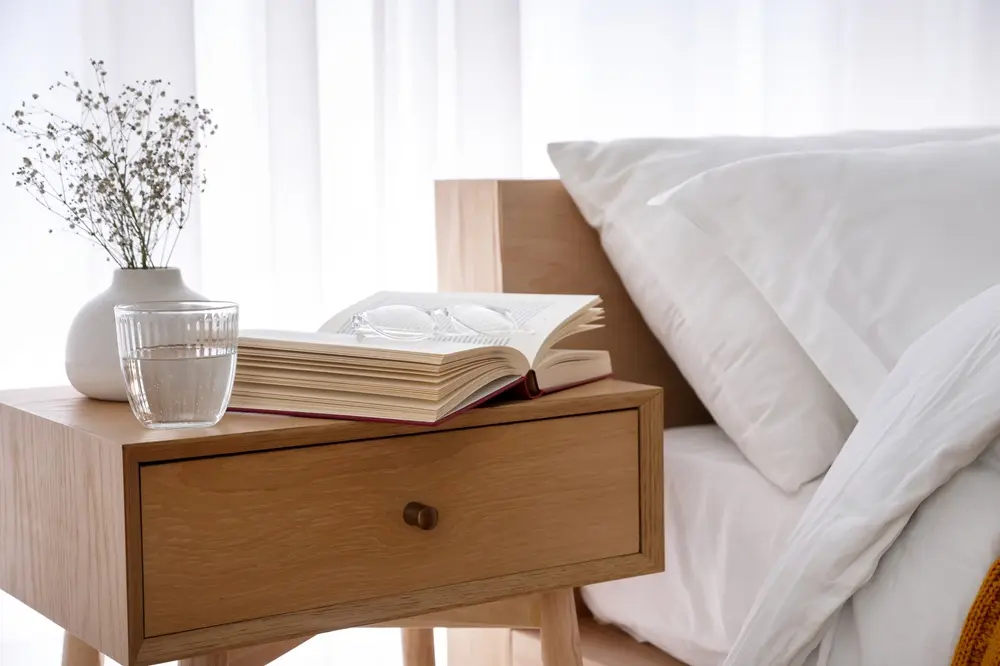
A Japandi side table demonstrates how even a small piece of furniture can contribute to a thoughtfully considered interior. Through natural materials, balanced proportions, simple forms and purposeful functionality, it can add warmth and convenience without disrupting the calm character of the space.
Whether placed beside a sofa, bed, reading chair or floor cushion, the best side table is one that feels like a natural part of everyday living. When its design responds to both the room and the way it is used, simplicity becomes more than an aesthetic choice. It creates a home that feels comfortable, practical and quietly beautiful.
*Some of the images featured in this article were created using generative AI.